

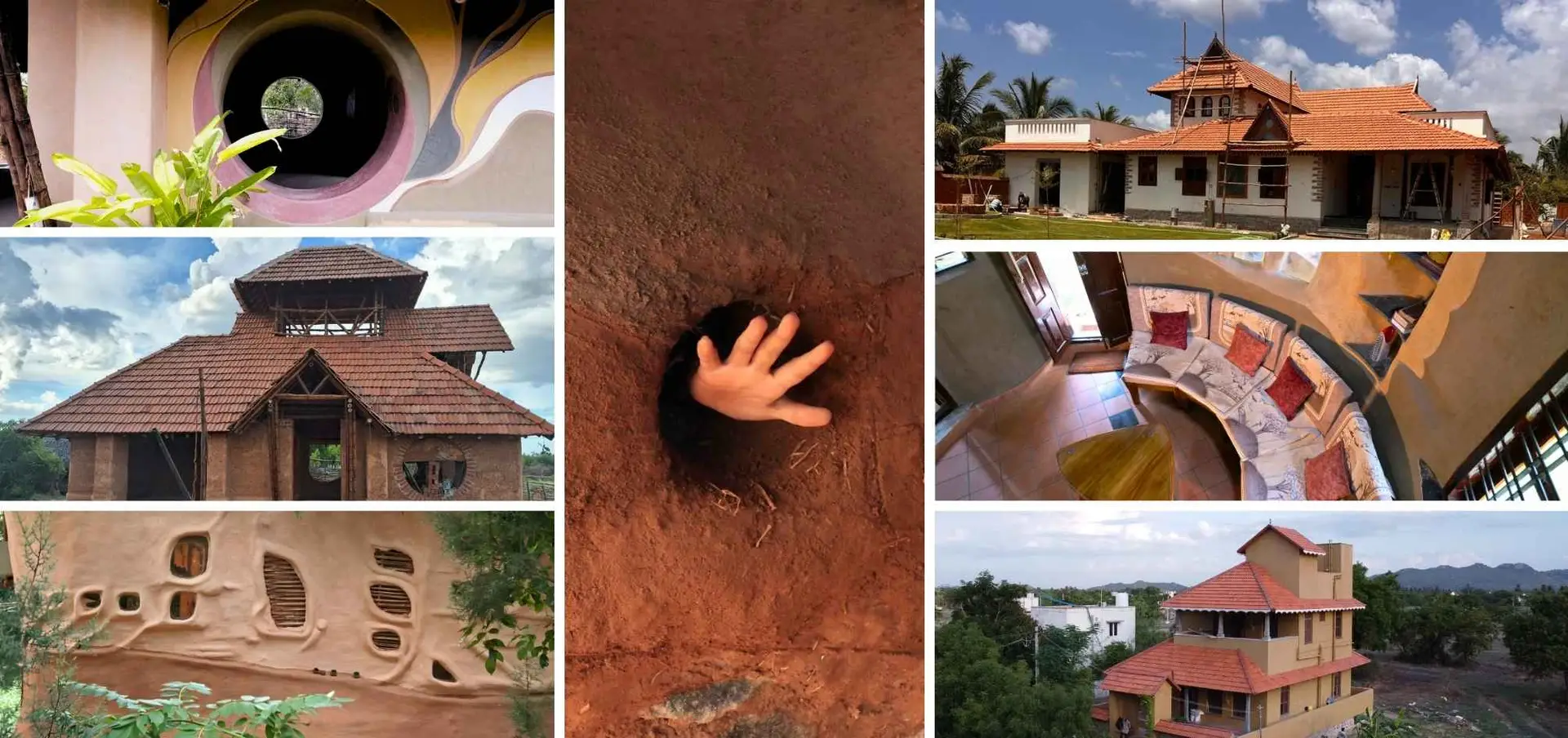
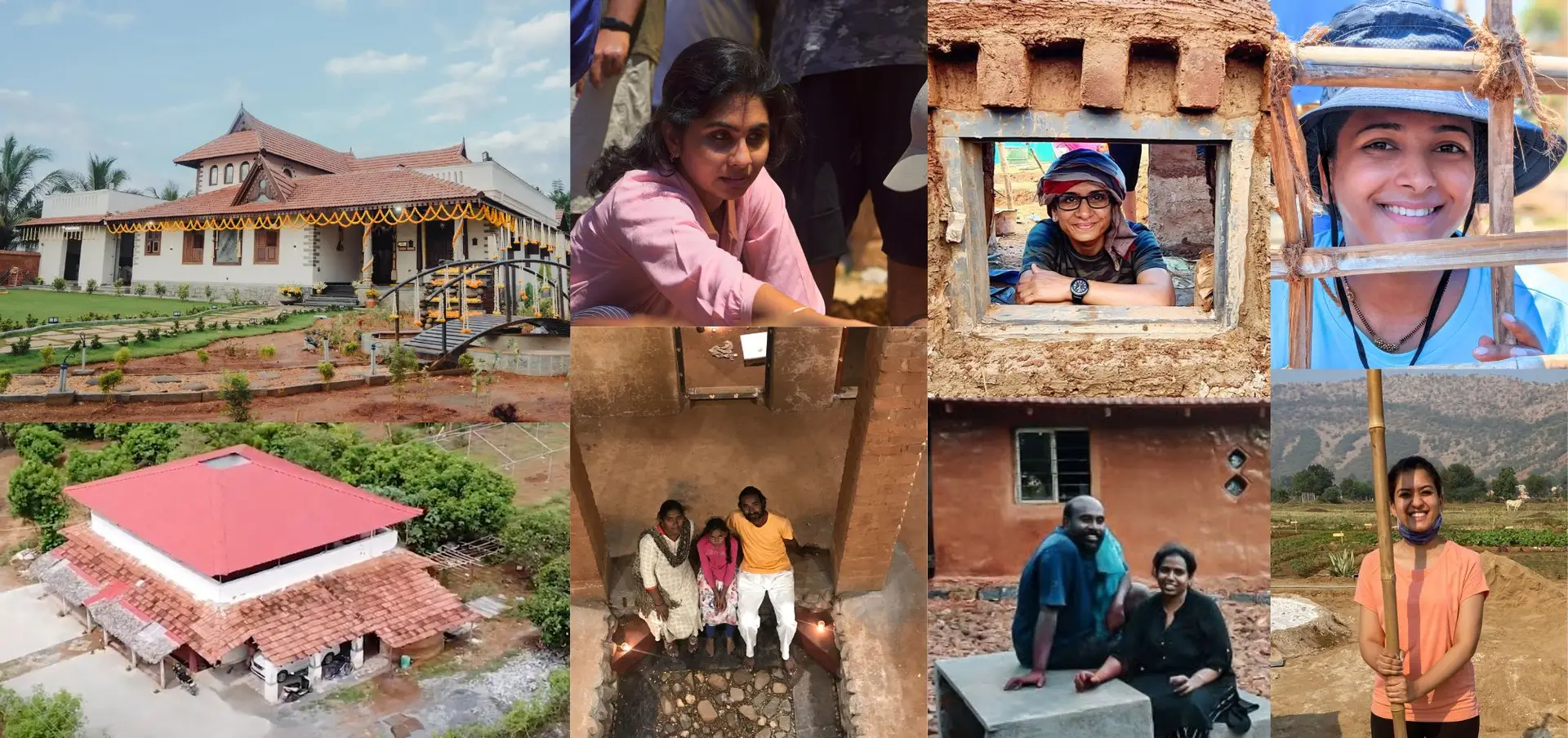
The quick answer (2026): Mud house construction cost in India (natural building) is about ₹1,500–4,500 per square foot. Build it yourself as an owner-builder and it starts around ₹1,500/sq ft — Jagadeesh, a farmer we trained, built his 570 sq ft home at ₹1,350/sq ft in 2023. With a professional team, expect ₹3,000–4,500/sq ft. A conventional cement house runs ₹2,700–3,800/sq ft (2026, standard quality) — so the real price depends on who builds and how much you learn. See real owner-built homes — including homes built by India’s wonder women — in our owner-built natural homes series.
Thinking about building naturally? We know it sounds exciting, but let’s be real—it also comes with a thousand questions that keep you up at night.
You wonder: “Will it be stable enough?” “Will it hold up in the rains?” “Can I actually live in it?”
But, let’s be honest, it always comes down to that one question that everyone asks, sooner or later: “How much will it cost?”
Well, guess what? We have the answer for you.
Table of Contents
Understanding Natural Building: What exactly is a natural building, and why is it becoming so popular?
- Before we talk about the cost of a natural building, let’s pause and ask ourselves: What exactly is a natural building? We seem to have forgotten. Just a century ago—before the widespread use of cement—every building was a natural building. Isn’t it embarrassing that we abandoned these structures, which have stood tall for centuries, weathering the fiercest heat, torrential rain, raging winds, and even disasters?
- Yet somehow, we shifted to cement, a material that struggles to last even a few decades. And now, do we dare to compare it with nature itself? How foolish have we become? What happened to our wisdom?
- A natural building is crafted from materials like mud, lime, bamboo, wood, stone, and plant admixtures—all sourced from the nature around you. It’s more than just a structure; it is an extension of us, who live in it, a reflection of our harmony with our environment.
- Let’s not forget this simple truth as we consider the cost. Because maybe, just maybe, the true cost isn’t only in money, but in what we’ve lost by forgetting where we came from.
Before starting a natural building project, it’s essential to understand its principles and possibilities. This foundational knowledge helps ensure your vision matches practical realities and allows for a smooth transition from idea to execution. To gain this understanding, consider joining our Combo Hands-on Workshop or enrolling in our Online Course.
The Turn of the Tide: Why are more people choosing natural buildings and how this affects costs?
- In our rush towards industrial and digital advancement, we’ve lost touch with nature. Our focus shifted from living in harmony with the environment to manipulating it for mass production. This change from ‘Crafting’ to ‘Production’ set off a chain reaction of problems.
- Today, we see a resurgence of natural processes in various sectors like food, healthcare, and clothing. However, these natural products often come with a higher price tag compared to their commercial counterparts. Here’s a snapshot from each industry:
- Food: ordinary branded rice sells at about ₹53–77 a kilogram in 2026, while certified organic rice costs ₹75–150 — one and a half to two times more.
- Clothing: a metre of polyester or polyester-cotton blend costs ₹38–65. Handspun khadi cotton costs about ₹192 a metre at Khadi India’s own counter, and pure linen ₹500–1,000 — three to fifteen times more.
- Shelter: the same story. A conventional cement house in 2026 costs roughly ₹2,700–3,800 per square foot, while a professionally built natural home costs ₹3,000–4,500.
- Food, clothing, shelter — in all three, the natural thing now costs more than the manufactured one. Not because nature became expensive, but because we industrialised the alternative.
- This shift shows that what was once cost-effective—just a century ago—has become significantly more expensive due to changes in how we process materials. But here’s the catch: these costs reflect buying ready-made products. When you take on the task yourself, the scenario flips.
- Understanding this helps us see the true cost of our choices and highlights the value of returning to simpler, more sustainable practices.
What does a natural building cost per square foot in India?
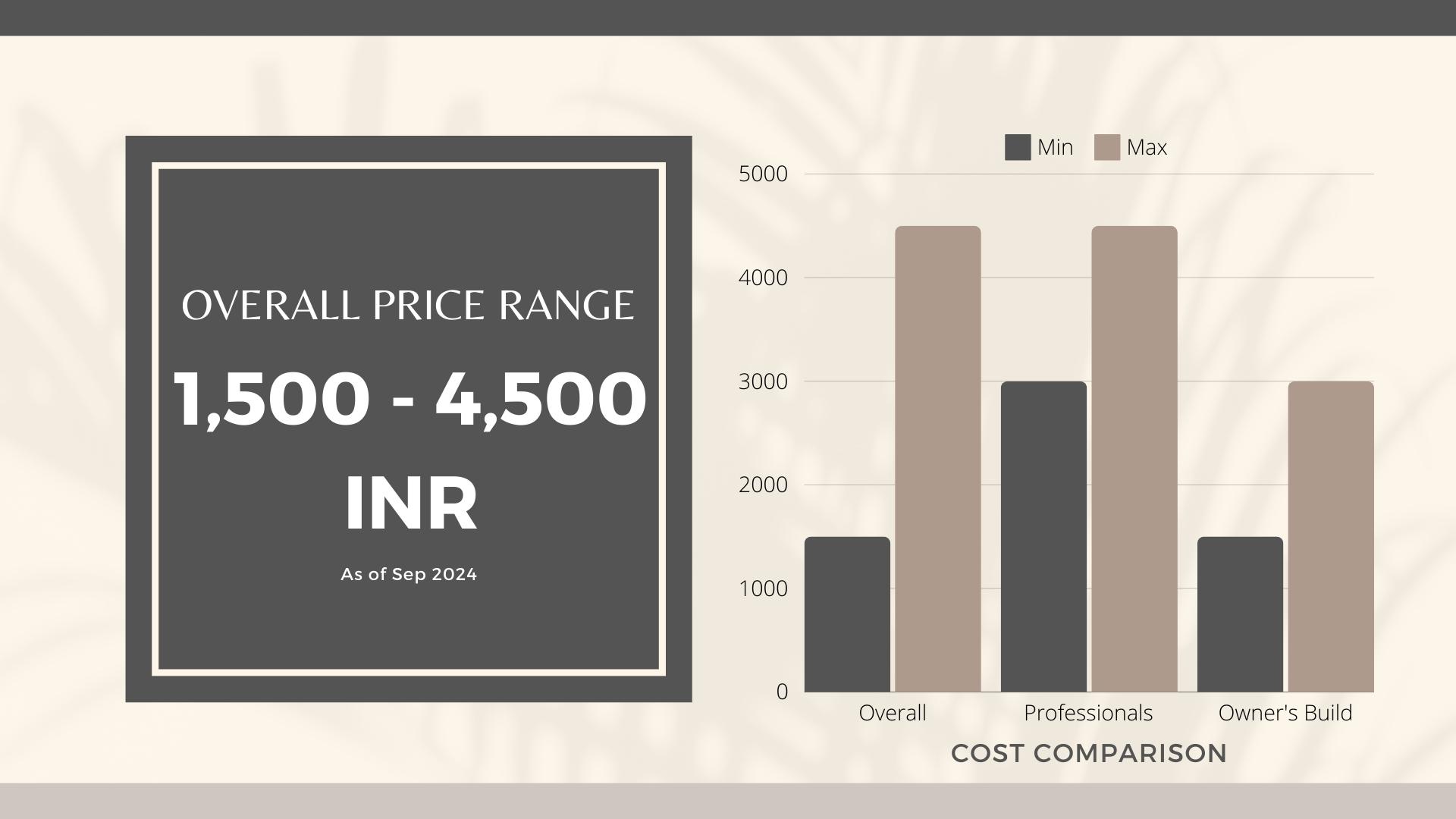
- When it comes to natural building, the cost can vary widely due to factors like techniques used, methods of execution, and material availability. As of 2026, prices still range from 1500 to 4500 INR per square foot. This broad range reflects the difference between a DIY approach and a professional, turnkey solution.
- With over 18 years of experience in natural building, we’ve learned that there’s no fixed price per square foot; costs vary with each project. Factors such as the site, design, and labor play significant roles in determining the final cost.
- Based on the data we’ve gathered from various projects, we estimate that a professionally done natural building will typically cost between 3000 INR and 4500 INR per square foot. If you take on the project yourself, costs can start as low as 1500 INR per square foot currently.
- This gives you a rough idea of what to expect when budgeting for a natural building. It’s important to understand these variables to make informed decisions about your project.
What does a 1,000 sq ft mud house cost in India?
At ₹1,500–4,500 per square foot, a 1,000 sq ft natural home costs roughly ₹15–45 lakh. Built by an owner-builder who learns the work, it can start near ₹15 lakh; with a full professional team, expect ₹30–45 lakh. Jagadeesh, a farmer we trained, finished his 570 sq ft home for about ₹7.7 lakh — ₹1,350 per square foot.
Is ₹20 lakh enough to build a mud house?
Yes — if you build it yourself and keep the design simple. At owner-builder rates of about ₹1,500 per square foot, ₹20 lakh builds roughly 1,300 sq ft. Handed to a professional team at ₹3,000–4,500, the same ₹20 lakh gives about 450–650 sq ft. What decides it is not the budget but how much of the work you learn to do.
What does owner-building actually save?
The gap between building it yourself and handing it over is about ₹1,500–3,000 per square foot. On a 1,000 sq ft home that is ₹15–30 lakh — as much as the whole house costs at owner-builder rates. That difference is not a discount. It is the value of the skill, and it is the one part of your budget you can earn instead of pay. Without it the risk runs the other way: mistakes are the most expensive material on any site.
Learning the work is how that saving becomes real — through our hands-on workshops, the Back Home online course (Parts 1–4), or both together.
Understanding Yourself: Defining your own goals and needs to align them with your budget.
- Before even thinking about the design, the first step in any building project is to understand exactly what you want. This may sound simple, but it’s often where people get stuck. In architecture, desires usually fall into three categories:
- Necessity – The basics required to function or live.
- Think of a small, well-ventilated room, a simple kitchen, and a single bathroom. It’s everything you need and nothing you don’t—a minimalist’s dream that keeps costs low.
- Comfort – A step up from the basics, where additional features make life easier and more enjoyable.
- This could mean adding a second bedroom, a larger kitchen, or an outdoor deck for relaxing. It’s not extravagant, but it adds a level of ease and pleasure to daily living.
- Luxury – The high-end approach, where aesthetics and premium materials take center stage.
- Picture a home with expensive windows and doors, custom woodwork, a spa-like bathroom, or a rooftop garden. These elements don’t just serve a function; they make a statement.
- Necessity – The basics required to function or live.
- Now, you probably realize that cost follows this same pattern:
Necessity < Comfort < Luxury. - But here’s the twist—you don’t have to pick just one. You can combine these elements to find a balance that suits your budget, needs, and style.
- For example:
- You might opt for a necessary layout but add a comfortable kitchen space for family gatherings.
- Or, you may keep most of the house comfortable but splurge on a luxurious master bedroom with custom furniture and a private terrace.
- So, what do you really want from your building? Is it a place that meets your basic needs, a home that adds comfort to your everyday life, or a statement of luxury? Your choices will shape not just your space, but also the cost.
- Understanding this balance is the key to creating a building that fits your vision without straining your wallet.
- Before even thinking about the design, the first step in any building project is to understand exactly what you want. This may sound simple, but it’s often where people get stuck. In architecture, desires usually fall into three categories:
Understanding your site: How your site’s specific characteristics (like soil type, climate, terrain, etc.,) can impact the overall cost.
- When planning a natural building, your site’s location plays a crucial role in shaping both costs and environmental impact. Natural homes, whether cob, adobe, earthbag, etc., can be more affordable in rural areas with lower material and labor costs, but site accessibility and terrain can greatly affect your budget.
- Remote or hard-to-reach locations may require specialized equipment, more labor, or longer timelines, sometimes at the cost of environmental disruption.
- For instance, building on a steep hill might require heavy machinery, disturbing the ecosystem
- While deep forest sites can cause wildlife disruption and transportation challenges.
- The beauty of natural building lies in using local materials—mud, lime, sand, straw, bamboo, and wood, etc. Sourcing these nearby reduces both costs and your carbon footprint. However, when local materials aren’t available, transporting them increases both ecological and financial costs.
- There’s also a misconception that natural buildings are impractical in urban areas, but Manisha’s home proves otherwise. Her urban natural home stands as a testament to how these structures can thrive even amidst city life.
- Natural building, whether rural or urban, is about making thoughtful choices. You’re not just constructing walls; you’re building a relationship with the earth. Every decision, whether sourcing local materials, minimizing environmental damage, or reducing your carbon footprint reflects your commitment to sustainability.
Impact of Design on Cost: How smart design decisions can help keep your project within budget?
- There are major aspects to designing a Natural Building. Let’s see one by one.
- Design Complexity: The design of a natural home significantly impacts costs. Complex designs with intricate elements, such as curved walls or custom features, increase both labor and material expenses. These designs require specialized skills and additional time, raising labor costs. Detailed features like rounded windows or elaborate door frames necessitate more precise craftsmanship and thus, more expenditure.
- Structural Integrity: For flat roofs with longer spans, steel beams are often needed if suitable wooden beams are unavailable. However, sourcing reclaimed wooden beams from old houses can provide a more affordable and sustainable alternative. Using these recycled materials not only lowers costs but also adds character and reduces environmental impact.
- Aesthetic Value: Incorporating simple, cost-effective mud finishes can enhance both functionality and visual appeal, transforming walls into artistic features. While using naturally colored lime finishes may raise upfront costs, the long-term benefits of their beauty, durability, and low maintenance make them a worthwhile investment.
- Efficiency vs. Aesthetics: Simpler designs are generally more cost-effective. They use materials more efficiently and are quicker to build, reducing overall expenses. However, incorporating curves thoughtfully can balance aesthetics and function, offering both beauty and potential savings in structural costs.
- In summary, selecting a design involves finding a balance between our creative vision and practical needs, ensuring it fulfills our functional requirements while remaining within our budget. It’s essential to choose a style that resonates with us personally, enhancing our living environment. Ultimately, the goal is to create a space that reflects our identity without compromising on affordability.
Why does labour cost more than materials in a natural building?
- In conventional construction, labor typically accounts for about 30% of the cost, while materials make up 70%. Natural building, however, often reverses this ratio—materials might only constitute around 40% of the cost, with labor making up the remaining 60%. This shift underscores the significant human effort and skill involved in natural building. The materials price is high in conventional buildings because of its sourcing that all the materials are outsourced. In natural buildings usually it is less because materials are sourced and manufactured from land or nearby regions. It can also increase if we purchase all the materials from various places like conventional buildings.
- Owner-Build: Reducing labor costs can be achieved by becoming an owner-builder. Managing the building process yourself and involving friends and family can cut expenses and add a personal touch. However, this approach requires considerable time and effort. Without professional expertise, mistakes are more likely, potentially leading to unforeseen costs. For small projects under 1,500 sq.ft. and ground floor constructions, we offer a combo workshop and also online course. You can choose between hands-on sessions where you build with our guidance and consultations or opt for lifetime access to our comprehensive online course. This combination ensures you get the support and resources you need to successfully complete your natural building project.
- Volunteers & Workshops: Using volunteers offers another way to save on labor costs. Many students and enthusiasts seek hands-on experience with natural building techniques. While this approach can reduce costs, it’s important to remember that volunteers are there to learn, and their pace and productivity may vary. Providing a safe environment with adequate food and accommodations is essential. Mismanaged expectations can lead to delays and increased costs if the project stalls before completion. Also we must understand that many who come for workshop or volunteer work are new to this craft so they are bound to make errors which reflect in the structural integrity of the building.
- Professional Labor: Hiring professionals, though initially more expensive, provides significant benefits. Skilled professionals work more efficiently, reduce errors, and ensure high-quality finishes, which are crucial for the durability and aesthetics of natural buildings. Investing in professionals can lead to fewer complications and a quicker completion, potentially saving money and resources in the long run. If you lack experience, consulting or hiring professionals can help avoid costly mistakes and ensure a well-constructed building.
- Training Unskilled Labor: In natural building, unskilled labor often requires training due to the limited availability of professionals. This creates a collaborative effort between owner-builders and the labor force. Training within each project helps build a skilled workforce, benefiting future projects and advancing the craft. Many owners and building professionals participate in our Combo hands-on workshop or enroll in our Comprehensive online course. By bringing their masons and labor teams, they ensure they stay within budget and effectively manage the building process. Whether choosing the hands-on workshop for immediate, practical experience or the online course for flexible, in-depth learning, this dual approach equips them with the skills and knowledge needed to see their natural building projects through to success.
- The Right Balance: Balancing owner-building, volunteers, and professional labor depends on your budget, timeline, and goals. Owner-building and volunteers can reduce costs but may require more time and patience. Professional labor, while more costly, offers speed and quality. Every decision should reflect a commitment to sustainability and respect for the earth. Cutting corners on labor might save money initially but could have environmental consequences if not managed carefully.
- Example of the Right Balance: For a 1,200 sq. ft. natural home, a balanced approach could be:
- Foundation and Structure: Use professionals for the foundation and structural elements to ensure stability and high standards.
- Wall Construction: Combine professionals for complex tasks with volunteers for less technical work, using locally sourced materials.
- Finishing Work: Rely on professionals for plastering, flooring, and detailed carpentry to ensure high-quality finishes.
- Example of the Right Balance: For a 1,200 sq. ft. natural home, a balanced approach could be:
- This approach balances cost, quality, and community involvement, ensuring a well-constructed, sustainable home.
Cost cutting in sourcing of Materials: Various methods to reduce the material costs from sourcing itself.
- Local Availability:
- Source materials like Lime, stones, and wood/bamboo from nearby areas to reduce transportation costs.
- Use locally abundant materials like fibers, admixtures/natural polymers for better enhancement of the building quality.
- Use Recycled or Reclaimed Materials:
- Reuse bricks, stones, tiles, or wood/bamboo and even mud from demolition sites or older buildings to save costs and reduce environmental impact.
- Look for second-hand or surplus materials like doors, windows, and fixtures, beams, etc.,
- Harvesting On-Site:
- If possible, harvest building materials directly from your land, such as soil for adobe or cob, and stones for foundations.
- Bulk Purchases:
- Buy in bulk for essential materials like mud, sand, stones, lime, wood, admixtures to get discounted rates.
- Consider community-based bulk buying with other builders to save on costs.
- Sustainably Managed Resources:
- Choose wood/bamboo from sustainably managed forests or certified suppliers to ensure responsible sourcing.
- For materials like lime, ensure they come from eco-friendly processing methods and local kilns
- Negotiate with Local Suppliers:
- Establish relationships with local suppliers for better deals, delivery options, or future discounts.
- Ask suppliers if they have overstocked or surplus materials, which are often sold at a lower price.
How do foundation, walls, roofing and finishes change the cost?
- When planning on a natural building project, it’s essential to grasp how the construction process can be divided into four fundamental components: Foundation, Walls, Roofing, and Finishes. Each of these elements plays a crucial role in determining the overall cost, functionality, and aesthetic of your building.
- 1. Foundation: The foundation is the cornerstone of any building. It provides stability and support, ensuring that the structure can withstand environmental forces. Choices range from traditional rubble masonry to more specialized methods like pile foundations or sandbox techniques. The type of foundation you select will impact both the initial cost and long-term durability of your building.
Learn About Foundation. - 2. Walls: Walls are the defining feature of your building’s structure and contribute significantly to its thermal performance and appearance. Options include cob, wattle and daub, adobe, and compressed stabilized earth blocks (CSEB), etc. Each wall system has its own set of requirements and costs, influenced by factors such as material availability and the skill level of the labor force. Fusion of Wall systems can also be used like shuttered cob, wattle and cob, etc.,
Learn About Different Wall Systems. - 3. Roofing: The roof not only protects your building from the elements but also contributes to its overall aesthetic. Roofing options include sloping roofs, which, despite their complexity, offer distinct architectural appeal, and flat roofs, which can be more straightforward and economical. The choice of roofing material and design will affect both the cost and functionality of your building, particularly in relation to local climate conditions.
Learn About Different Roofing Techniques. - 4. Finishes: Finishes encompass the final touches that enhance the appearance and durability of your building. This includes plastering and flooring, with choices ranging from simple mud plasters to high-end lime finishes and basic earthen floors to natural stone surfaces. The selection of finishes not only impacts the visual appeal but also affects the maintenance and longevity of your structure.
For eg: Costly Lime plaster can be provided in water prone areas like bathrooms, water tanks whereas cost effective mud plasters can be applied above sill level in bedrooms, living room,etc.
Learn about Different Natural Finishes. - Understanding these four components—Foundation, Walls, Roofing, and Finishes—provides a clear framework for planning and budgeting your natural building project.
- To determine the choice of techniques one should understand the hierarchy of natural building which is provided in this Thannal’s Natural Plasters Booklet.
- Each part influences the overall cost and performance of your building, and making informed choices will ensure that your project meets both your aesthetic goals and practical needs.
How to Make It Cost-Effective? Tips and Tricks: Practical strategies to reduce expenses without sacrificing quality.
- Choose Land with Good Drainage
- Flat or gently sloping land with good drainage reduces the need for extensive earthworks, which can be expensive.
- Example: Land with a natural slope for water runoff requires fewer modifications, saving on drainage systems.
- Orient for Shade, Not for Sun:
- In India the aim is to keep heat out. Run the long walls north and south, and keep east and especially west windows small and deeply shaded by verandahs or overhangs.
- Example: India’s Eco Niwas Samhita (BEE) asks for openable window area of at least 16.66% of floor area in warm-humid zones and 10% in hot-dry zones. Thick earth walls do the rest — in a monitored mud house at Meenakshipuram near Madurai, indoor air held 31.7–32.9 °C through mid-April and stayed cooler than outdoors from 8 am to 7 pm (Madhumathi et al., JMEST, 2014).
- Wider Foundations Are Cheaper:
- A wider, shallower foundation (such as a rubble trench) uses less material and is easier to construct than a deep foundation.
- Example: A rubble trench foundation costs less because it uses local stone and gravel without modern synthetic binders.
- Mud or Lime Mortar:
- Using mud or lime mortar in RR masonry saves costs and is environmentally friendly.
- Example: RR masonry with mud mortar can reduce foundation costs significantly when compared to more conventional alternatives.
- Use Local Materials:
- Sourcing materials locally saves on transport costs.
- Example: Cob or adobe made from site soil costs nothing but labor, while wood or stone might need to be transported, raising expenses.
- Earth as a Building Material: Earth-based materials like cob or adobe are cost-effective and environmentally friendly.
- Example: Adobe bricks made on-site are more affordable than purchasing wood or metal-based construction materials.
- Flat Roofs are Cheaper:
- In dry climates, flat roofs require fewer materials and simpler construction than sloped roofs.
- Example: A flat limecrete roof in a dry area can save roughly 20-30% on material costs compared to a pitched tile roof.
- Intermediate Roofs:
- In high rainfall areas, use intermediate flat roofs first and finish with sloped roofs later. This spreads costs over time.
- Example: In tropical climates, this approach reduces immediate roof costs by using bamboo or wooden rafters before investing in a permanent solution.
- Energy Efficiency:
- Optimize for Climate: Choose materials that suit your climate, reducing unnecessary insulation costs.
- Example: In warm climates, high thermal mass materials like adobe provide sufficient insulation without added expense.
- Mud Plaster is Inexpensive:
- Use mud plaster for interiors as it’s easy to repair and costs less when mud is procured from the site itself.
- Example: Applying clay plaster costs very less when compared to lime plasters if the clay is extracted from the soil of the site.
- Simple Flooring:
- Tile flooring is the most cost-effective and durable choice when compared with other floors such as cow dung flooring or lime flooring
- Example: For instance, terracotta floor tiles and local stone slab flooring are not only more affordable but also exceptionally durable. These materials can be creatively combined to enhance the aesthetic appeal of your space while maximizing functionality.
- Use Unskilled Labor:
- Earth-based techniques like cob or adobe can be worked by unskilled labor, reducing costs.
- Example: Hiring local labours like one good mason and 2 helpers for cob building can reduce labor costs by 40-50% compared to hiring professionals.
- DIY Portions of the Project:
- Learning basic techniques through workshops or online courses enables you to build yourself and save on labor.
- Example: Attending a natural building workshop to learn the natural building techniques can save you thousands in professional fees.
- Design for Future Expansion:
- Plan walls and layout to allow for easy future expansion, saving costs on future renovations.
- Example: Design a home with modular walls that can be opened for additional rooms as the family grows.
- Durable Materials Save in the Long Run:
- Invest in long-lasting materials for foundations and roofs, reducing repair costs.
- Example: A stone foundation with Lime pozzolanic mortar might cost more upfront, but it lasts significantly longer than alternatives, saving on future repairs.
- Join Natural Building Networks:
- Engage with the community to share resources, get free advice, and save on costs.
- Builders in online natural building forums can swap materials and share tips for sourcing affordable local supplies.
- Attend Workshops:
- Attending natural building workshops gives you hands-on skills, reducing reliance on paid labor.
- Also many of our students bring their own labor teams to hands-on workshops to upskill and stay within budget.
- Join the Combo workshop which has both Hand-on and Complete online library
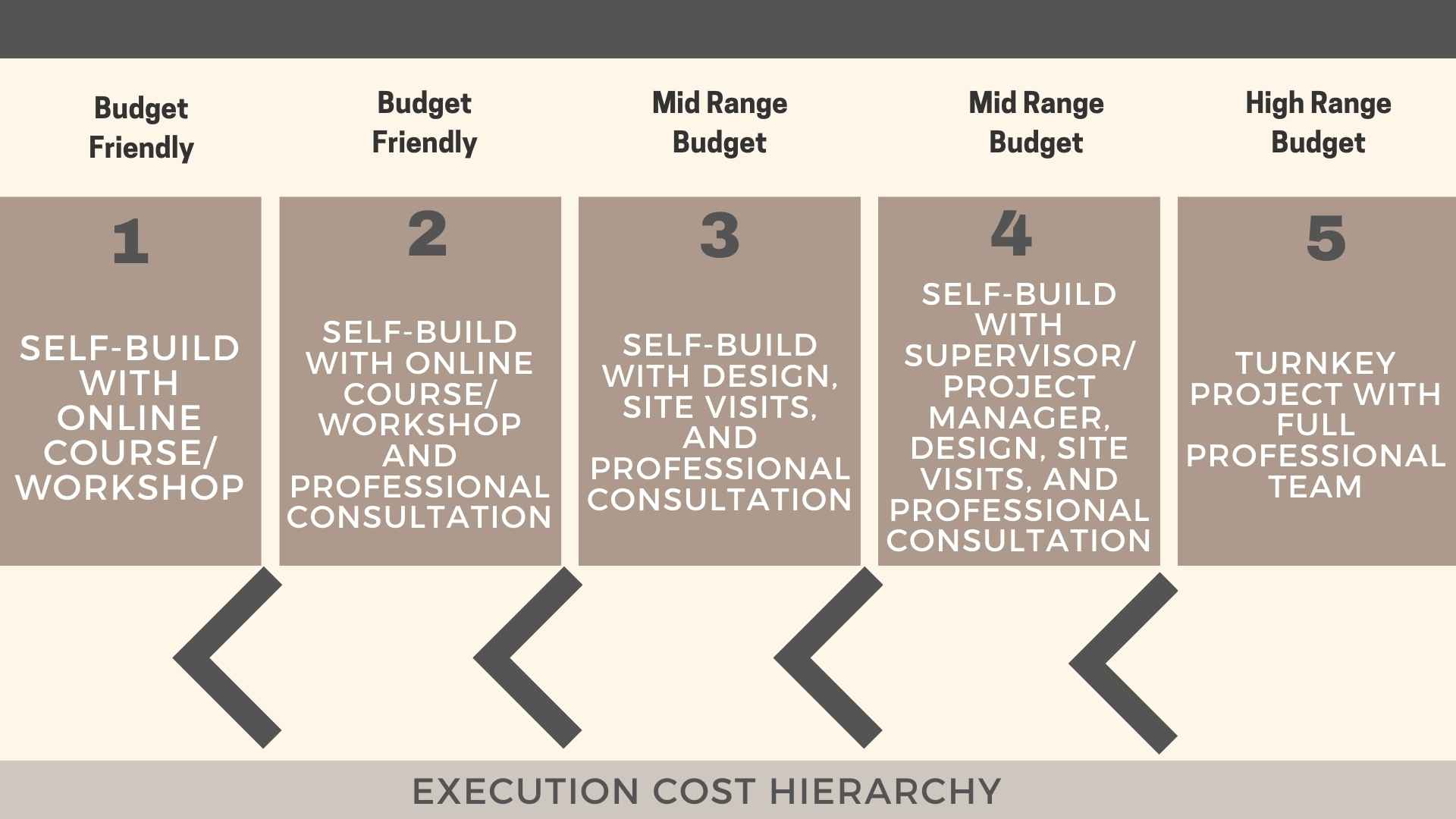
What are the different ways to build — from DIY to turnkey?
Over 18 years of teaching and building, we have seen every route a family can take — from doing the work themselves to handing it over to a full team. This is how they compare.
| How you build | Who it suits | Cost level | See it built |
|---|---|---|---|
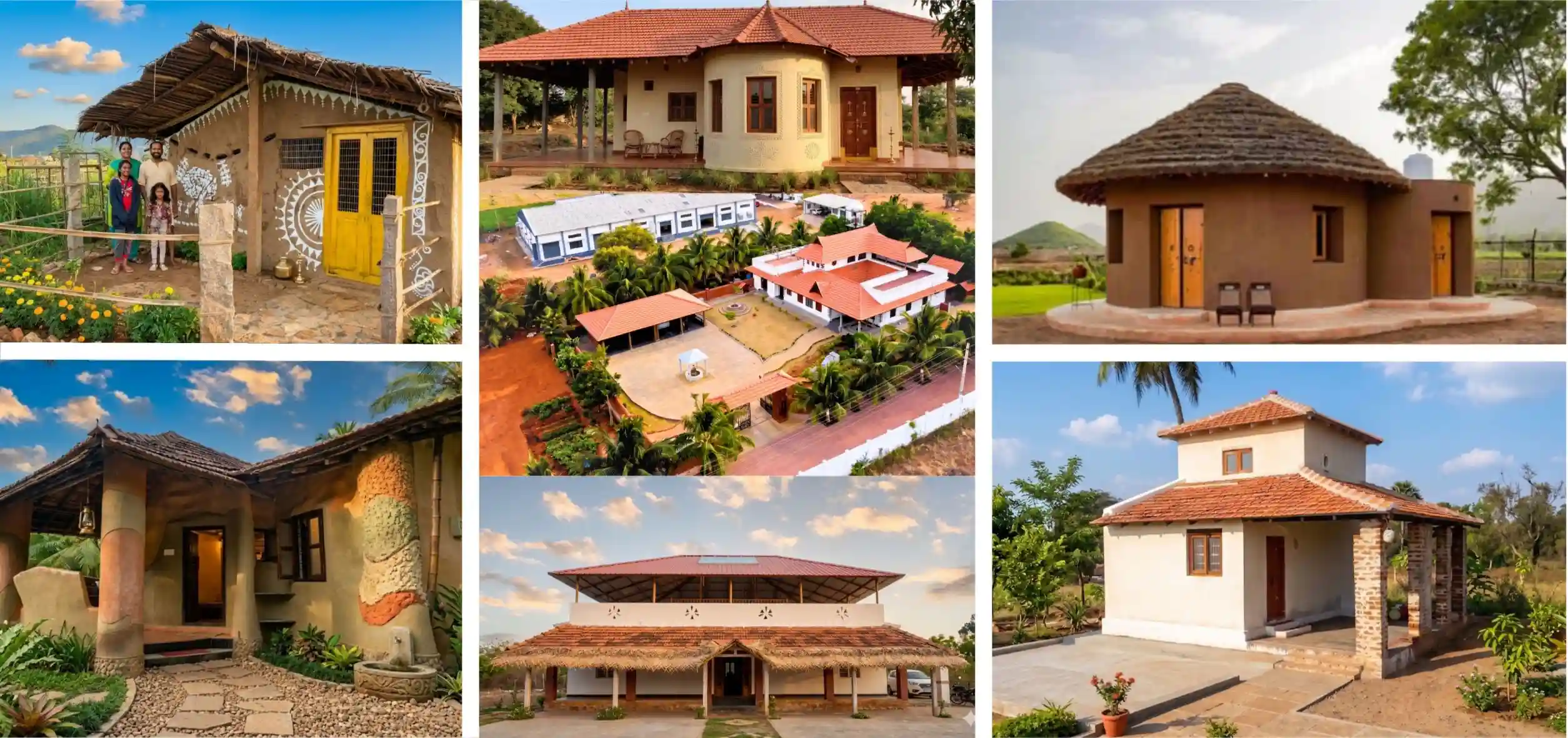
| Self-build with our online course or workshop | Up to 1,500 sq ft, ground floor | Lowest | Mahesh Krishnan, Owner’s Build, Mysore · Duplex cob home built by an I.T. professional |
| Self-build with online course and professional consultation | Up to 1,500 sq ft, ground and first floor | Low | Khan Market’s Natural Haven, Delhi |
| Self-build with design, site visits and consultation | 1,500–3,500 sq ft, up to second floor | Mid | Jayan Cherian’s mud and bamboo home, Attappadi, Kerala |
| Self-build with a supervisor or project manager, plus design and site visits | 1,500–3,500 sq ft, up to second floor | Higher | The Wattle & Daub Cottage |
| Turnkey, with our full professional team | Over 2,000 sq ft, up to third floor | Highest — not cost-effective | Thannal’s construction wing, Earth Projects (earthprojects.thannal@gmail.com) |
What are the disadvantages of a mud house?
They ask for care. Earth walls need a high stone plinth and a generous roof overhang, or driving rain will find them. They take longer to build, and skilled hands are still rare. Cement coatings must never be used — they trap moisture inside the wall and cause decay. None of this is a fault in the material; it is what building with something alive asks of you.
Conclusion: Building a Natural Home Starts with Learning
- Natural building is not just a construction method; it’s a philosophy that combines sustainability, creativity, and a connection to nature. Whether you are doing a self-build or opting for a turnkey solution, the journey always begins with gaining knowledge about the techniques, materials, and practices that make natural building successful.
- The key to any natural building project is learning—either through hands-on workshops or comprehensive online courses. This foundational knowledge helps you avoid costly mistakes, choose the right materials for your climate, and make decisions that ensure your home is safe, durable, and environmentally responsible.
- Cutting costs can be achieved by sourcing local or reclaimed materials, but it’s crucial to do so in a way that doesn’t compromise the quality and longevity of your home. Skimping on critical systems like electrical or fire safety will only lead to higher expenses later.
- By taking the time to educate yourself and plan carefully, you can create a beautiful, sustainable, and healthy home that reflects both your values and your budget.
- If you mean to build it yourself, begin by learning the work — our hands-on workshops and the Back Home online course (Parts 1–4) exist for exactly that.
Frequently Asked Questions
What are some effective ways to learn about natural building before starting a project?
- Workshops: Offer hands-on experience and the chance to learn from experts
- Self-paced Online Courses: Provide comprehensive knowledge and flexibility for learning anywhere, anytime.
- Natural Building Networks and Forums: Connect with a community of like-minded individuals for shared resources, advice, and support.
What decides the cost, and how can I reduce it?
Four things decide it: your site, your design, your materials and above all your labour — which is about 60% of a natural building’s cost. You reduce it by taking on more of that labour yourself, sourcing materials locally or reclaimed, and keeping the design simple. Learning the work first is what makes owner-building safe rather than expensive.
How much does mud house construction cost per square foot in India?
In 2026, a mud house costs roughly ₹1,500–4,500 per square foot in India. Owner-builders who learn the skills and manage the work themselves can start around ₹1,500/sq ft — one of our trained farmers, Jagadeesh, built his 570 sq ft home at about ₹1,350/sq ft. A professionally built natural home usually falls between ₹3,000 and ₹4,500 per square foot.
Is a mud house cheaper than a concrete house?
It depends on who builds it. A standard cement house in 2026 costs about ₹2,700–3,800 per square foot. An owner-built mud house can cost far less (from about ₹1,350–1,500/sq ft), while a professionally built natural home costs similar or slightly more. Over its lifetime, a natural home usually wins — lower repair, cooling and health costs.

Dharan Ashok
This article is by Natural builder and Architect Dharan Ashok. This article is a part of the Thannal Homes series


3 thoughts on “Cost of Natural Building?”
Namaste Somashekarji,
Thank you for your kind words. “ಮರಳಿ ಮಣ್ಣಿಗೆ” says it all—your encouragement means a lot to our team.
Realistic and thought provoking concept. You people are doing a great job. It is good to go ‘ಮರಳಿ ಮಣ್ಣಿಗೆ’ (back to earth).
Thank you for such a detailed and informative article