
Build a Natural Home
Build a Natural Home with Thannal
With 18 years of excellence in Pure Natural Building, Thannal Natural Homes empowers you to create your dream natural home through a comprehensive suite of services. Whether you wish to develop a deep understanding of natural building through our interactive courses or prefer the convenience of an entirely managed project, we have the perfect solution for every need.
Learn the Craft: Workshops & Self Paced Online Courses
For those who value a hands-on learning journey, our educational programs provide a detailed introduction to natural building principles.
- Free Introductory Courses: Whether you are a client or someone who wants to learn natural building, it’s best to start with our free course and articles.
- Innovations in Learning: We’ve created the World’s first Natural Building learning app. You can enroll in the online course now and get 15% off: Part 1-4 Complete Companion of Natural Building Online Course
- Explore the journey on how it took around 6 years to develop the complete companion of the online course.
- Start with the story and overview of “ Back Home”: Learn Natural Building Online
- Immersive Learning Combo: Our Hands-On Combo Workshop offers a practical experience paired with our self-paced online course:
- Workshop Details: Natural Buildings Workshops
- The Combo workshop includes lifetime validity access to the online course: Part 1 – 4: Complete Companion of Natural Building. This course guides you step-by-step through sustainable construction techniques.
- These courses are designed to equip you with essential skills to plan, design, and build your home.
- Note: Only 3 numbers of 10-day Combo workshops are held per year.
- To enroll/participate, contact us at: thannalroots<@>gmail.com.
Enjoy a Seamless Experience: Turn-Key Projects and Consultations
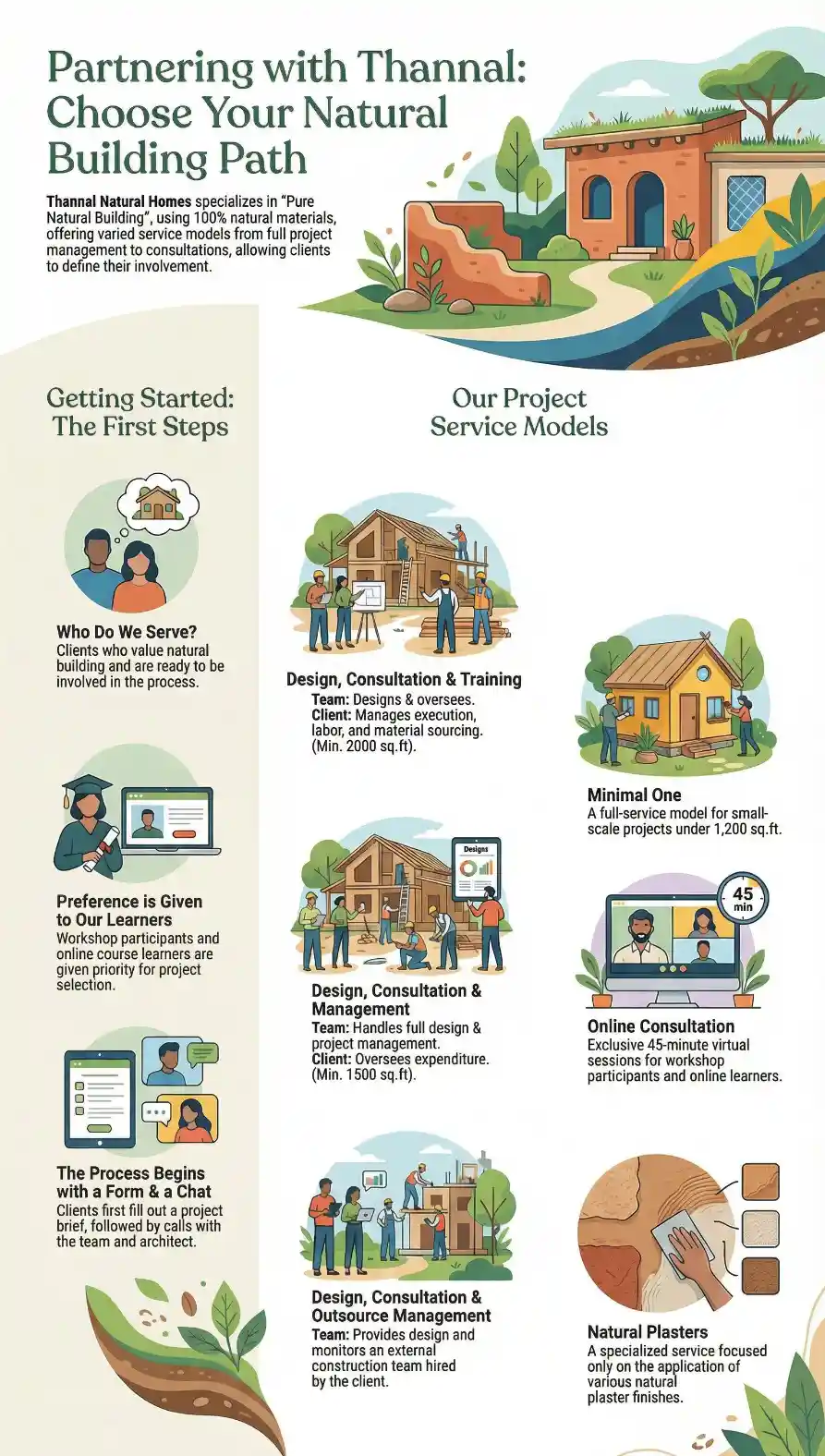
As Thannal’s Project Wing, we specialize exclusively in Pure Natural Building Projects—managing every aspect of the design and construction process. This service is perfect for clients facing urban and reverse migrant construction challenges who seek innovative, sustainable, and completely hassle-free outcomes. From concept to completion, our turnkey approach ensures your natural home is built with precision, quality, and care.
| Project Category | Description | Examples |
|---|---|---|
| 1. Design, Consultation and Training | The client manages execution and sourcing while the team provides design, consultancy, and oversight via periodic site visits with an onsite supervisor. (Only for people who have attended workshop) | Laterite Home in Zaheerabad Plot area: Built up area: 2BHK - G+1 Walls - Laterite blocks with lime mortar Roof - Tandoor stone slab roof with surkhi limecrete Plasters - Surki + lime (Lohi) plasters in interior, Laterite waste powder plaster with lime and hemp, clay plasters, white lime plasters and exterior pointing Flooring: Tandoor stone flooring Additional Elements: Windcatcher system, Cob oven and rocket stove. Status: Completed |
| 2. Design, Consultation and Management | The team handles design, consultation, and full project management, while the client oversees expenditure and process. | Akils’s Round Cob Home - Tiruvannamalai: Plot area: 40*60 = 2,400 sq.ft Built up Area: 1400sq.ft 2B2HK - G+1 Wall systems - Cob, Burnt brick with Lime mortar Roof - Hourdi Roof with Limecrete, Mangalore tile (Reclaimed) Plasters - Lime, sand pozzolanic plasters, clay plasters and Lime washes Flooring: Stone tile flooring Status: Nearing Completion |
| 3. Design, Consultation and Outsource Management | The team provides design, consultation, and project monitoring to oversee an external construction team. | Graeme and Linda Burn’s Ayurvedic Retreat haven - Vaidyagrama, Coimbatore Built up area: 1,362 sq.ft 2BHK, G+Open Terrace Walls: 2’ thick cob walls with internal brick walls Roofing: Hourdi Roof with Limecrete and Managalore tile roofing Plasters: Lime platers and Clay Plasters Flooring: Kota Stone Flooring. Special Element: Windcatcher Status: On-Going |
| 4. Online Consultation | Exclusive 45-minute virtual sessions for workshop participants and online learners, with charges based on the assigned architect/civil engineer. | Chef Kalyon’s Mud Home, Sonavale, a village near Murbad in Maharashtra (3 hours from Mumbai). Total built-up area: 15×36 ft = 540 sq.ft Construction timeline: December 2022 to May 2023 Walls: Shuttered cob, Brick Columns Roof: Mangalore tile roofing Plasters: Mud and Lime plasters with Mud washes and Lime plasters Special Element: Glass Bottled full wall |
| 5. Minimal One | Full design, consultation, and management service provided by the team for small-scale projects under 1,200 sq.ft. | Farmer Jayan’s Cob and Wattle & Daub Home, Attapadi Built up area: 1020 sq. ft. Spaces: 2 bedrooms, living room, kitchen, toilet, study, balcony, verandah. G+Attic Techniques used: Stonemasonry with Mud and Lime Mortar, Cob, Wattle and Cob, Wattle and daub, Split bamboo for the first floor, intermediate walls, mud and lime plastering, terracotta tile flooring. |
| 6. Plasters | Specialized application of various Natural Plasters, including Lime plasters (With Natural Pigments), Thannal’s Earthen Finishes, Thappi-Lohi-Araish (Rajasthani Plasters), and Special Ayurvedic plasters. | Thannal Campus, Kanchana’s Cettinad Home, Jayan’s Mud home, Partha’s Lime surkhi plaster and laterite dust plaster |
- Financial Clarity & Project Inspiration
- Building naturally is a journey of transparency. We believe that when a client understands the true value of materials and craftsmanship, the project flourishes.
- Understanding the Investment: To align your vision with your budget, we highly recommend reading our detailed guide: Cost of Natural Building. This article is essential reading; it ensures that both you and the Thannal team are on the same page regarding the economics of sustainable construction.
- Explore Our Portfolio: See how these philosophies come to life across different scales and climates. Browse our diverse range of completed and upcoming works at Thannal Projects.
- Get in Touch
- Ready to start your journey with earth? Whether you have a specific site in mind or need guidance on the best category for your needs, we are here to help.
- For all project-related inquiries, please email us at: earthprojects.thannal@gmail.com
- For workshop, please email us at: thannalroots@gmail.com
Frequently Asked Questions about Natural Building Projects
Why is it beneficial to understand the craft even if I engage Thannal to manage my project?
Natural building is a soulful craft, not a standardized industrial process. Unlike conventional cement construction, which relies on uniform, factory-made materials, a natural home is built using a complex harmony of earth, lime, bamboo, stone, and specialized plant admixtures. By developing a foundational understanding through our courses or workshops, you gain vital insight into:
Material Wisdom: Recognizing why specific herbs, plant juices, and minerals are added to the earth to ensure durability, health, and breathability.
Labor Transparency: Gaining a deep respect for the intense manual skill and “man-hours” required by artisans, which helps you appreciate the true value and rhythm of your home’s creation.
Technique Diversity: Realizing that a structure is uniquely adapted to its environment—whether through Cob, Adobe, Wattle & Daub, or Earthbag—based on your specific climate and local resources.
Empowered Ownership: Whether you choose a “Minimal One” project or “Design & Management,” being an informed client allows you to oversee the process with confidence. It ensures that the long-term care and maintenance of your home becomes second nature to you.
What is the best way to start learning about natural building?
We recommend starting with our Free Introductory Course. It provides a solid foundation for both prospective clients and aspiring builders. You can access it here: Introduction to Natural Building India.
What is the "Immersive Learning Combo"?
This is our most comprehensive educational experience. It pairs a 10-day hands-on workshop with lifetime access to our Part 1–4 Online Course. Please note that only three of these workshops are held per year.
Is there a digital way to learn?
Yes! We have created the World’s first Natural Building learning app. You can enroll in the “Complete Companion” online course (Parts 1-4) through the app and currently enjoy a 15% discount.
Will natural buildings withstand heavy rains?
Yes. It is a common misconception that they cannot handle rain. Almost all buildings constructed 70–100 years ago were natural buildings, and they have successfully withstood the test of time. With proper design and traditional stabilizers, these homes are incredibly resilient.
What type of buildings does Thannal cater to?
Thannal prefers to do Pure Natural Builds. We focus on 100% natural materials to create healthy, breathable living spaces
Can we build multi-storey structures?
Definitely yes. We can build multi-storey natural buildings entirely without the use of cement. In India 2- 3 storey natural buildings are very common. One example is a multi-story apartment complex in Shibam Yeam which is over 10 storey and still used even nearly after a thousand years.
Is there any option other than RCC roof for open terrace?
We have a wide variety of flat roofs. Check out the article using the link.
Can we make different coloured walls or plasters or paints?
Yes. Different colored plasters can be done on walls to bring the asthetics of a natural building.Check out the link to the article on natural finishes.
Can we build a foundation without cement?
Definitely yes. The very simple and long followed one is Random Rubble masonry with Lime mortars.One can also make the foundation masonry with different materials based on the availability.
What Natural Building techniques does Thannal prefer for construction?
We use a wide range of indigenous and modern natural techniques:
- Foundations: Various traditional and site-specific natural foundations.
- Walls: Cob, Wattle and Daub, Shuttered Cob, Adobe, Lime Bricks, CSEB (Compressed Stabilized Earth Blocks), and Earthbags.
- Roofing: Flat Mud roofs, Limecrete, Terracotta tiles, and Hourdi roofs.
- Plasters: Specialized finishes including Lime (with natural pigments), Earthen finishes, Thappi-Lohi-Araish (Rajasthani), and Special Ayurvedic plasters.
Are natural buildings sustainable for future generations?
Absolutely. One of the greatest gifts of a natural home is its ability to be reused and recycled. Unlike concrete, which becomes toxic debris at the end of its life, the materials in a natural home—earth, stone, and lime—can eventually return to the soil or be repurposed for new structures. Furthermore, natural materials do not “off-gas” harmful volatile organic compounds (VOCs), ensuring a healthy, non-toxic environment for your family today and a cleaner planet for generations to come.
What are the maintenance requirements for a natural building?
There is a common misconception that “lifeless” concrete homes require no maintenance, while natural homes are high-maintenance. In reality:
The Hierarchy of Longevity: From humble huts to grand palaces, the lifespan of a natural building depends on the hierarchy of materials and techniques chosen. If you select high-specification options—such as stabilized foundations and high-quality lime plasters—the maintenance required is remarkably low.
Living Structures: While a concrete house eventually cracks and degrades in a way that is difficult to repair, a natural home is a “breathing” entity.
Proactive Care: When you partner with us to design a long-life natural building, we prioritize “good boots and a good hat” (strong foundations and wide roof overhangs). This strategic design ensures that your home remains durable and requires minimal intervention over the decades.
Is it feasible for urban regions or cities?
Yes. very much possible. You can check out how Manisha built her home in Khan Market Delhi.
What is "Earth Projects"?
Earth Projects is Thannal’s project wing specializing in Construction solutions. We manage every aspect of design and construction, making it a hassle-free experience for clients, especially those facing urban or reverse-migrant construction challenges.
Out of which project category which one is available to people who has not attended workshop or any online course?
- Design, Consultation and Training: We provide the design and oversight while the client manages execution.
- Design, Consultation and Management: We handle full project management while the client oversees expenditure.(Also for people who have not attended workshop or online course)
- Design, Consultation and Outsource Management: We monitor an external construction team of your choice. (Also for people who have not attended workshop or online course)
- Online Consultation: Exclusive 45-minute virtual sessions for our students and workshop participants.
- Minimal One: Full service specifically for small-scale projects under 1,200 sq.ft. (Also for people who have not attended workshop or online course)
Plasters: Specialized application of natural and Ayurvedic finishes.
How much does a natural building cost?
Outright pricing is Outdated. There is no outright pricing model in natural buildings. Even in cities like Chennai, Pune, Bangalore people build cement buildings as per specifications only. Costs vary based on the project scope and location. You can find a detailed breakdown in our article: Cost of Natural Building.
How do I get in touch?
- For Workshops & Enrollment: thannalroots@gmail.com
- For Projects & Construction: earthprojects.thannal@gmail.com
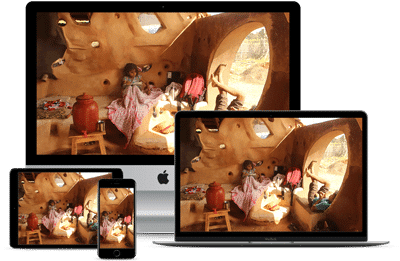

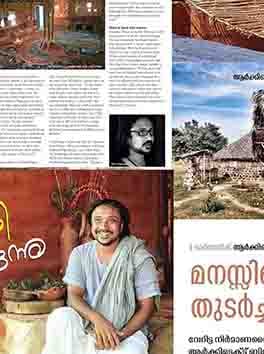
Over 50 + hands-on training programmes were conducted and 1500+ people trained