
News & TV

Media

Welcome to our media library. This page is a humble archive of our journey, documenting the conversations we’ve had with journalists, authors, and filmmakers from around the world. Here, you will find a collection of stories—in print, online, podcast and on video—that explore our work in reviving the art of natural building. We see each feature not as an accolade, but as a shared story about the growing movement towards sustainable, chemical-free living.

Thannal was founded as Thannal Hand Sculpted Homes and is now Thannal Natural Homes—both names mean the same organisation, so features written before about 2021 use the earlier name.

You can explore these stories using the filters below: All, Books, English, Hindi, International, Malayalam, Podcast, Tamil, and Videos.

“In our research, we have found that plants have a lot of importance in buildings.”
— Biju Bhaskar, founder of Thannal, in FWD Life, 2017
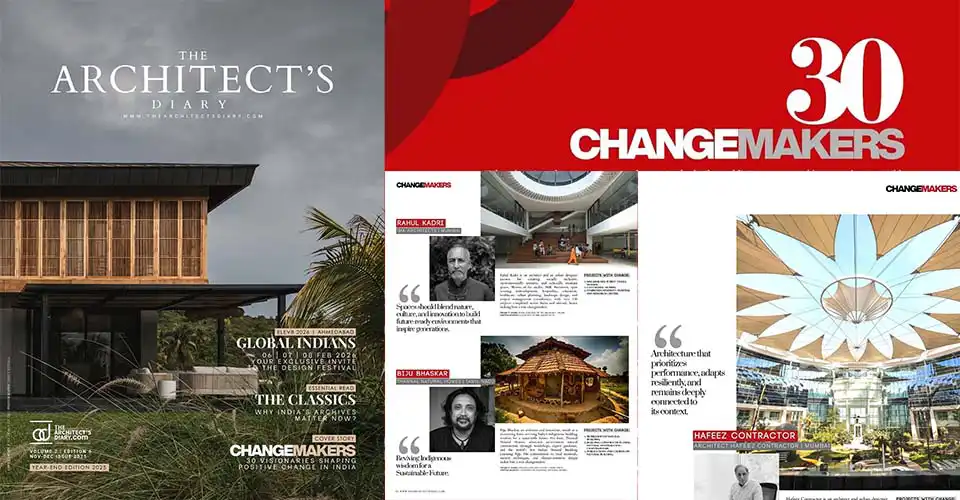
  • The Architect's Diary cover and its '30 Changemakers' spread featuring Biju Bhaskar and Thannal's Singing Dervish Studio.

    The Architect's Diary · 2026

    Design Stories: 30 Changemakers Shaping Art & Architecture

    Feature

    English
    Advocates zero-cement natural construction through workshops, expert guidance, and the world's first Indian Natural Building Learning App.

    For its 2026 'Changemakers' feature, the Indian architecture magazine The Architect's Diary named thirty people who reshape not just buildings but communities and futures — and chose Ar. Biju Bhaskar as the voice of natural, earth-based building, set among names like Ar. Hafeez Contractor and Ar. Vikas Dilawari. It carries his line, 'Reviving indigenous wisdom for a sustainable future,' and shows Thannal Natural Homes' Singing Dervish Studio in Tamil Nadu.

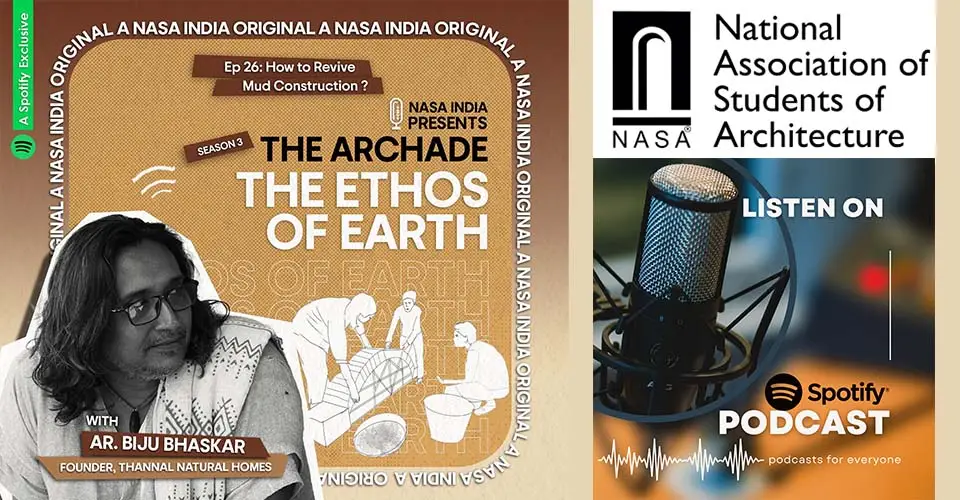
  • The Archade podcast cover (NASA India): portrait of Ar. Biju Bhaskar with the NASA logo and 'Listen on Spotify'

    NASA India — The Archade · 2025

    The Ethos of Earth

    Podcast

    EnglishPodcast
    We often chase futuristic designs, but what if the most advanced architecture is also the most ancient?

    The Archade, the podcast of NASA India — the National Association of Students of Architecture, the largest architectural student body in the world, reaching over 300 colleges — invited Thannal Natural Homes to talk mud, lime, and bamboo. So we were talking to the very people who will design tomorrow's buildings. This episode gently takes on the big doubt — can a mud home really last? — and shows how the oldest materials on earth build houses that are stronger, cooler, and healthier. A hopeful listen.

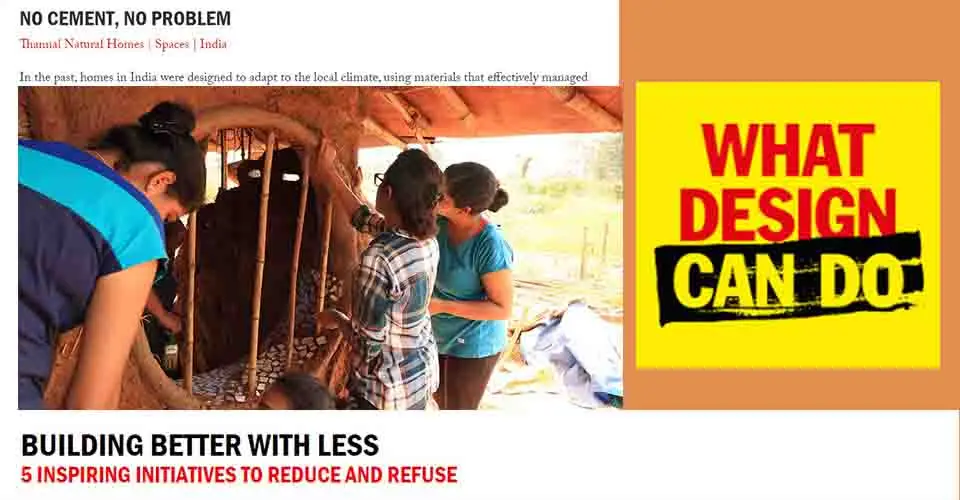
  • What Design Can Do feature No Cement, No Problem - young builders inside a bamboo and mud structure at Thannal

    What Design Can Do, Amsterdam · 2024

    Building better with less

    Natasha Berting

    EnglishInternational
    Thannal Natural Homes is an initiative that aims to revive age-old traditions of building and living.

    Around its Redesign Everything Challenge — an open call for climate solutions — the Amsterdam platform What Design Can Do spotlighted five initiatives worldwide: Germany, Kenya, Brazil, the UK and India, with Thannal the one chosen from India. Our section is headed "No Cement, No Problem," and a photograph of a Thannal building opens the whole article — the Indian answer to building with less.

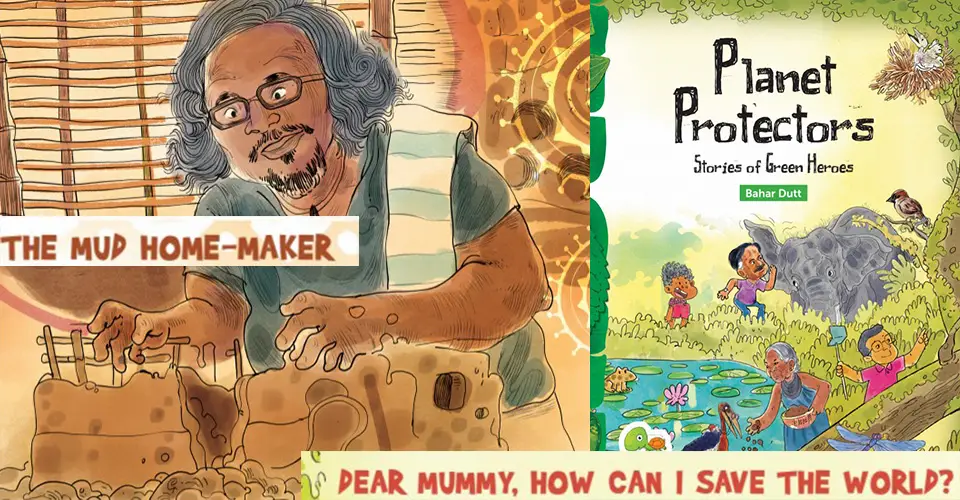
  • Illustration titled The Mud Home-Maker in Bahar Dutt's book Planet Protectors: Stories of Green Heroes

    Planet Protectors, TERI Press · 2024

    Planet Protectors: Stories of Green Heroes

    Bahar Dutt

    BooksEnglish
    Why do we make concrete structures with straight lines, when everything in nature is found in waves or curves?— Biju Bhaskar, in the book

    A Green Oscar winner — the only Indian environmental journalist to hold one — Bahar Dutt gives Ar. Biju Bhaskar of Thannal Natural Homes a chapter in her children's book Planet Protectors, published by Terrapin, an imprint of The Energy and Resources Institute (TERI), a major New Delhi research institute. The chapter, "The Mud Home-Maker," tells how Biju left a concrete education for a "year of unlearning", living with tribes, learning their craft of bamboo, grass and earth, and finding a guru in Madhya Pradesh, then home to Tamil Nadu, where architects come to unlearn and build with mud.

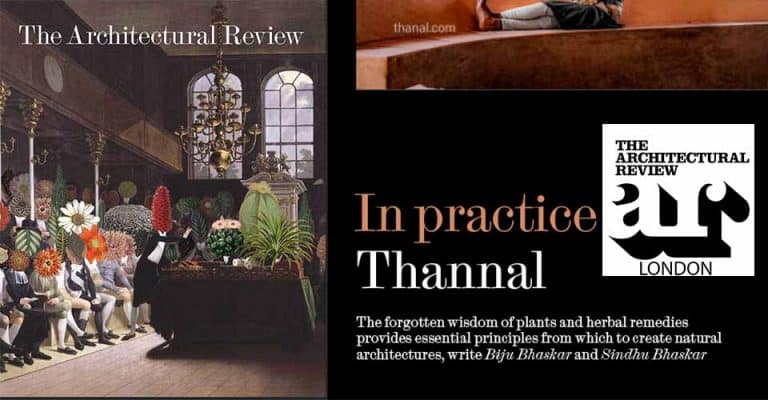
  • The Architectural Review, London — Biju Bhaskar's essay 'In Practice: Thannal' in the Plants issue.

    The Architectural Review, London · 2023

    In Practice

    Written by Biju Bhaskar

    EnglishInternational
    “Every element borrowed from the environment should be returned, so the next generation can borrow it new.”— Ar. Biju Bhaskar

    Founded in London in 1896, The Architectural Review ranks among the oldest architecture journals in the world. In 2023 it gave an entire issue to plants and bio-fibres as building materials, a first for an architecture magazine, and chose Biju of Thannal Natural Homes to write for it. His essay, "Architecture's Forgotten Power of Plants," shows plants used not as decoration but as structure — tree-bark gums that bond mud walls, kadukkai seeds that strengthen them, fenugreek that guards against termites: India's herbal building wisdom, revived.

    OWN WORKRead it ↗
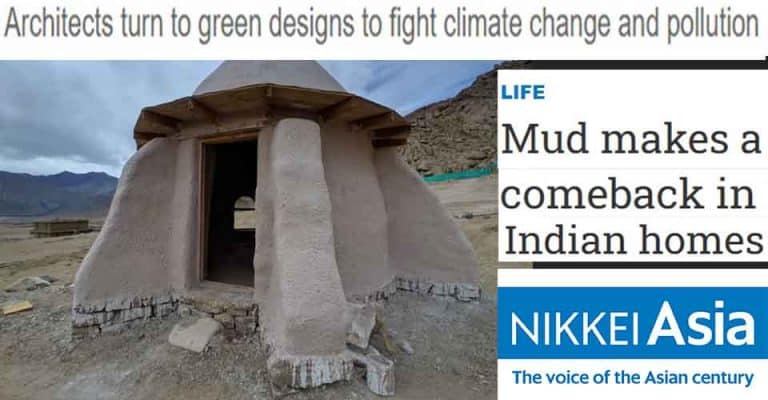
  • Nikkei Asia feature 'Mud makes a comeback in Indian homes' — a round mud dome house below bare mountains.

    Nikkei Asia · 2022

    Mud makes a comeback in Indian homes

    Kalpana Sunder

    EnglishInternational
    I started traveling to small villages to learn vernacular techniques from elderly masons, who use plant and animal derivatives in building — from fruit pulp, cow dung and urine to plant juices.— Ar. Biju Bhaskar

    When Nikkei Asia — the pan-Asian title of Japan's Nikkei, whose flagship is the world's largest financial newspaper — surveyed India's return to earthen homes, it turned first to Ar. Biju Bhaskar and Thannal Natural Homes. Kalpana Sunder set them among a new breed of architects challenging the country's cement-and-steel frenzy, noting that India is now the world's second-largest cement producer and that its construction and demolition waste runs to some 165 million tonnes a year. Today, the report notes, Biju mentors people from all walks of life who want to build their own homes; in Thannal's workshops they learn to turn every part of India's vernacular wisdom to their own advantage. Against the concrete rush, it holds up Thannal's mud, lime and bamboo.

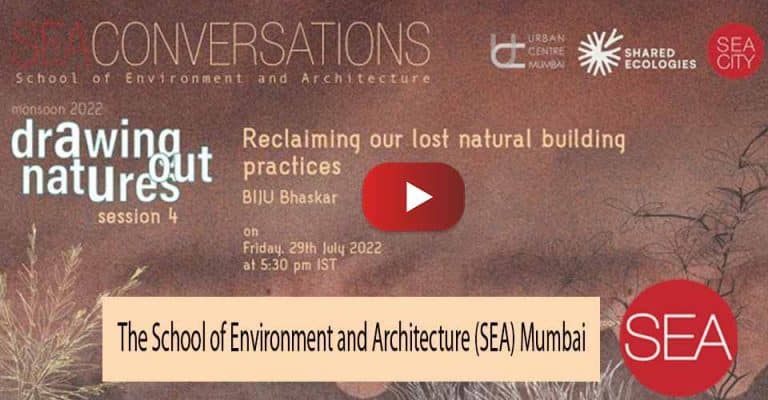
  • Poster for Biju Bhaskar's SEA Mumbai talk 'Reclaiming Our Lost Natural Building Practices,' 2022.

    School of Environment & Architecture, Mumbai · 2022

    SEA Conversations Session #5 — Reclaiming Our Lost Natural Building Practices

    Lecture

    EnglishVideos
    It is not just a way of construction but a way of living with minimal consumption of resources from nature.— Ar. Biju Bhaskar

    At the fifth of its SEA Conversations talks — the monsoon-2022 Drawing Out Natures edition — the Mumbai architecture college SEA brought in Architect Biju Bhaskar to discuss reclaiming India's indigenous shelter-making practices. Biju shares his transformative journey: leaving city life for a Tamil Nadu village, working in natural building with his wife Sindhu Bhaskar since 2008, and formally establishing the Thannal awareness group in 2011. He details their years of traditional building study in Rajasthan, and highlights building a campus without a single drop of cement.

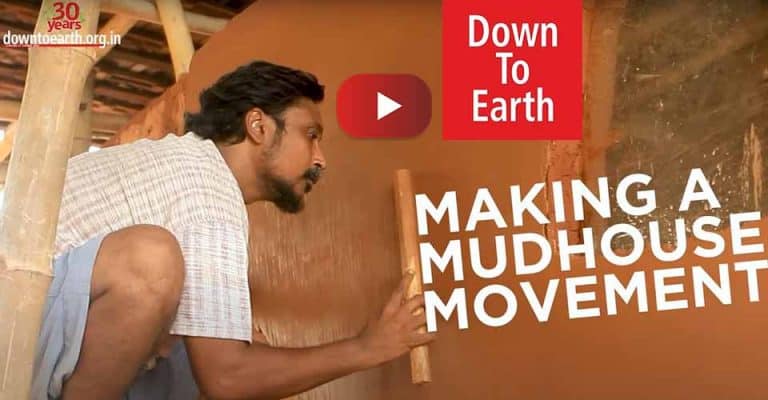
  • Down To Earth documentary (Centre for Science and Environment) — architect Biju Bhaskar doing Rajasthani Thappi plaster.

    Down To Earth · 2022

    The rise and fall of mud architecture

    Short documentary

    EnglishVideos
    A home is an extension of our mind… It should be really connected with our bodies. We live because we breathe. Home should be also like that.— Ar. Biju Bhaskar

    Opening with a fact that resets the whole argument, Down To Earth — the magazine of the Centre for Science and Environment, New Delhi — turned its short documentary to earth: of India's roughly 118 million houses, more than 65 million are still made of mud, even as mud is read as poverty and concrete as progress. The film traces where Ar. Biju Bhaskar began — an architect whose first ten years of commercial work were not his calling. Seeking to learn traditional craft, he met a tribal master sculptor in Khajuraho, and there watched a village family raise their own mud home, their children helping — something no university had taught him. For him this was never an 'alternative': mud has stood for thousands of years, and Thannal Natural Homes is only reviving that art.

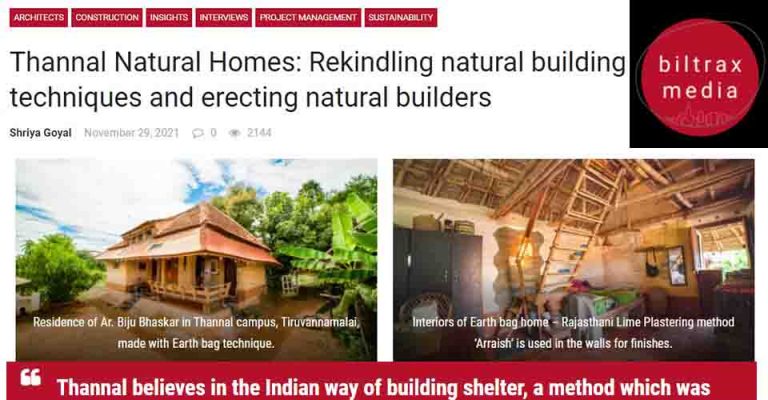
  • Biltrax Media feature on Thannal — the Biltrax logo, the headline, and Ar. Biju Bhaskar's earthbag home with Araish lime plaster.

    Biltrax Media · 2021

    Thannal Natural Homes: Rekindling Natural Building Techniques

    Shriya Goyal

    English
    The soil varies site to site, so the thumb rules are standardised locally.— Akhil Shajan

    When Biltrax Media — the publishing arm of a construction-data group that tracks over 17,000 building projects across India — turned its 'Expert Speak' pages to earth, it did something telling: it interviewed not a founder but an apprentice. Akhil Shajan, trained at Thannal, describes how the team tests every mud mix by civil-engineering methods, casting cubes to measure compressive strength and setting local 'thumb rules' with senior artisans — a quiet science growing under the craft. It is proof Thannal builds not only houses, but builders.

  • Cover of the UN One Planet Network and TERI 2021 report 'Circular Built Environment: Highlights from Asia.'

    United Nations — One Planet Network · 2021

    Circular Built Environment Highlights from Asia

    Case study

    EnglishInternational
    The money is invested in the village economy and serves as an example for rural projects to be sustainable.

    Facilitated by the UN Environment Programme, the One Planet Network is the United Nations' global partnership for sustainable consumption and production. Its 2021 report Circular Built Environment: Highlights from Asia chose the Community Seed Bank in Karur as a model case study — and names Thannal Natural Homes, led by Ar. Biju Bhaskar, as the organisation that guided its building. The off-grid, solar-run structure uses lime-stabilised cob, local palm-tree columns and terracotta tiles. For a UN policy document to hold up India's indigenous natural building is real recognition.

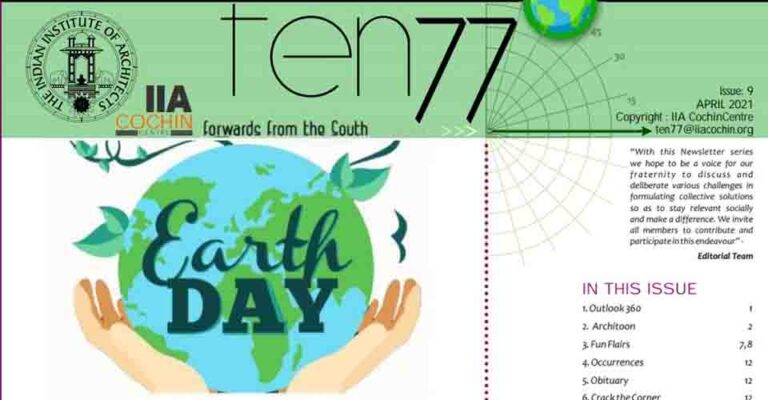
  • ten77 newsletter cover — hands holding a green 'Earth Day' globe — Indian Institute of Architects, Cochin, featuring Thannal.

    The Indian Institute of Architects · 2021

    ten77 — Earth Day issue

    Newsletter

    English
    Mud has a 'breathing quality' when used in pure form or mixed with lime, which adjusts itself to the temperature outside, like how water is kept cool in a pot.

    India's own body of architects put Thannal in print for Earth Day 2021: the Cochin Centre of the Indian Institute of Architects featured it in ten77, its newsletter. The article, "Sustainable Architecture for the Common Man," walks through Thannal Natural Homes' cement-free work — cob walls raised eighteen feet high and sealed with traditional Rajasthani Thappi plaster, and mortars mixed from prickly pear, aloe vera, tamarind seed and haritaki. Old wisdom, standing up straight.

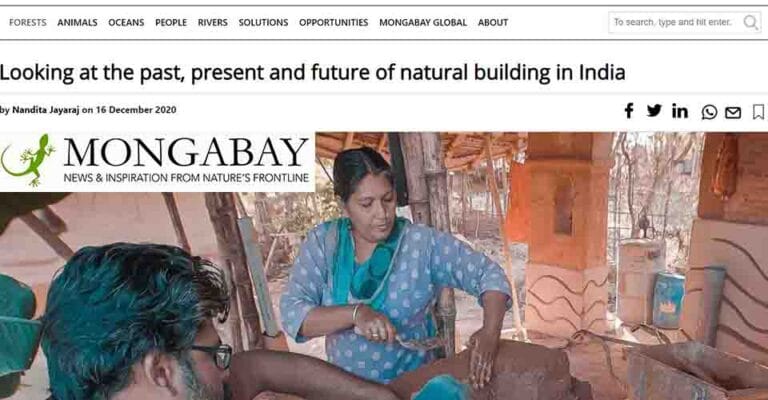
  • Mongabay India: Looking at the past, present and future of natural building in India, by Nandita Jayaraj

    Mongabay India · 2020

    Looking at the past, present and future of natural building in India

    Nandita Jayaraj

    English
    Thannal's aim is to give this back to regular people, to convey to local people that they can build a small home themselves.— Sindhu Bhaskar

    Mongabay reports on conservation and environmental science. This piece sets natural building against India's housing shortage and the eight per cent of global carbon emissions that come from cement. Much of it rests on Sindhu's plaster work — five different plasters she developed and refined through trial and error, from mud, lime, cow dung, egg white, aloe vera and fibre.

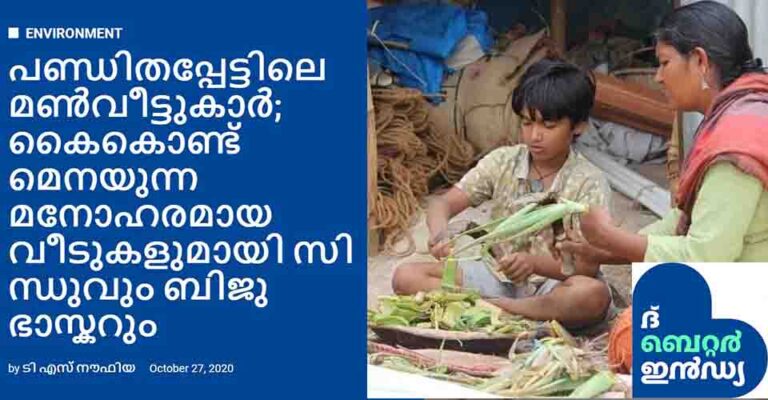
  • The Better India Malayalam story on the hand-built mud houses of Sindhu and Biju BhaskarMalayalam

    The Better India (Malayalam) · 2020

    The Mud-House Makers of Pandithapettu

    T. S. Noufiya

    Malayalam
    സിന്ധുവാണ് തണലിന്‍റെ നട്ടെല്ല്Sindhu is the backbone of Thannal.

    Leaving a busy urban architect's life, Biju came with his wife to the village of Pandithapettu in Tiruvannamalai, Tamil Nadu, carrying their two-year-old son Bodhi Vriksha. Their seven-year-old, Adhya Vriksha, stayed with his grandmother and followed them later. This Malayalam feature in The Better India — one of India's largest positive-news platforms — went looking for the rare Malayali woman building mud homes, and found Sindhu: no architect by training, she learned the old earthen ways and now teaches them.

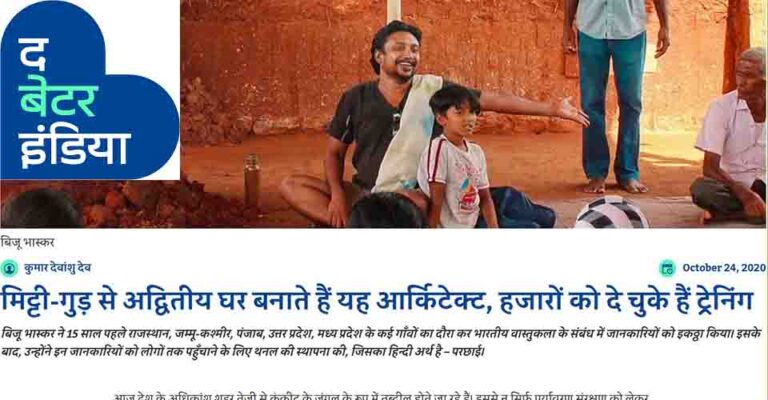
  • The Better India (Hindi) feature on architect Biju Bhaskar and Thannal's natural homes of mud, jaggery, lime and neem — built without cement.Hindi

    The Better India (Hindi) · 2020

    The Architect Who Builds Unique Homes from Mud and Jaggery

    Kumar Devanshu Dev

    Hindi
    जयन की जमीन मुख्य सड़क से काफी दूर है… 1020 वर्ग फीट में बने इस घर को स्थानीय स्तर पर उपलब्ध बांस, पत्थर, मिट्टी से बनाया गया है। — आर्किटेक्ट बिजू भास्करJayan's land is far from the main road… so this 1,020 sq ft house was built from bamboo, stone and mud available locally.— Ar. Biju Bhaskar

    For its Hindi readers, The Better India travelled to Tiruvannamalai to meet the architect turning away from the 'concrete jungle.' It shows how Ar. Biju Bhaskar and Sindhu Bhaskar build without a grain of cement — using mud, jaggery, turmeric, neem, lime, wood and stone — from a farmer's cool bamboo-and-mud home in Attapadi to a community seed bank in Karur. In a decade they have run over sixty workshops and trained more than a thousand people; Thannal, the report notes, means shade.

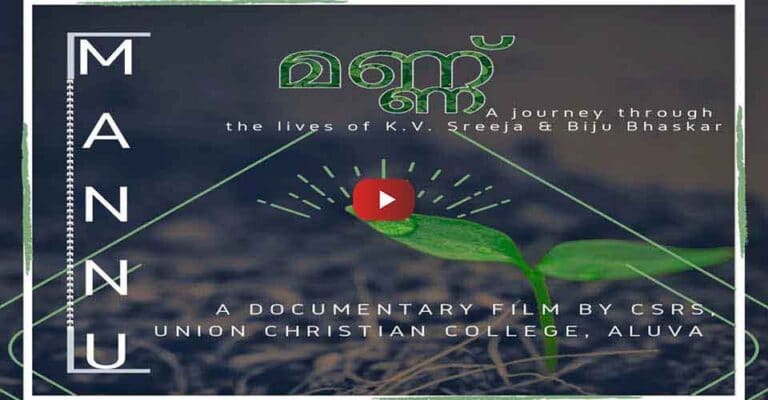
  • Poster for Mannu ('Soil'), the CSRS Union Christian College documentary on the alternative lives of organic farmer K.V. Sreeja and green architect Biju Bhaskar.Malayalam

    Mannu — a documentary · 2020

    Mannu ('Soil'): A journey through the lives of K.V. Sreeja & Biju Bhaskar

    Documentary

    MalayalamVideos
    The recent flood is a self-inflicted disaster caused by unscientific construction.— Ar. Biju Bhaskar

    Made by the faculty and students of the Centre for the Study of Religion and Society at Union Christian College, Aluva, this half-hour documentary is part of their UBCHEA project, 'Understanding Alternative Lives: Equipping Students for a Peaceful Co-existence.' It follows two who chose the land over the crowd — K.V. Sreeja in organic farming and Biju Bhaskar in green architecture — building with what the earth gives, choosing gentler methods less harmful to people and place, and embracing alternative schooling that lets children learn from nature rather than the classroom. Its very name, Mannu — soil — says where it all begins. English subtitles throughout.

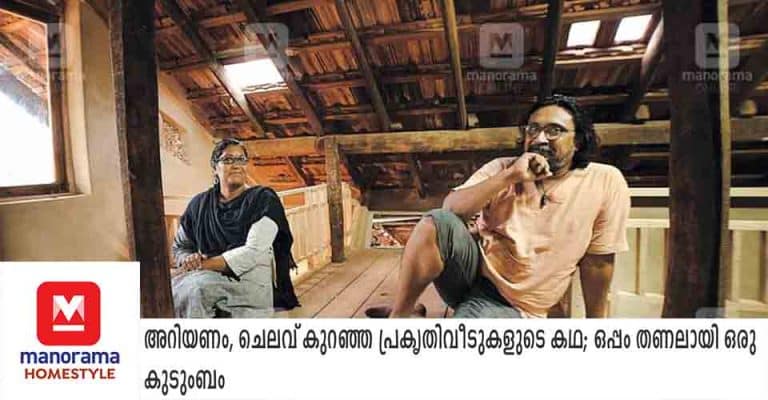
  • Malayala Manorama Homestyle feature on Thannal's Biju and Sindhu Bhaskar, who teach people to build their own low-cost natural homes.Malayalam

    Manorama Homestyle · 2020

    The Story of Low-Cost Natural Homes — and the Family Behind Thannal

    Nimmi Abraham

    Malayalam
    Thannal encourages people to build their own homes themselves, and gives the training to do it; many who came and learned have built homes of their own.

    Old lime-and-mud houses still stand while cement homes crack in a few years — and this feature in Malayala Manorama, one of Kerala's largest newspapers, walks through why. It lands on what really drives Thannal Natural Homes: education, documentation and research — studying India's fading building wisdom and setting it down. Thannal's own books carry that work further: its first e-book, Weaving Walls, and a second, Back Home, made together with a video series to reach more people. Behind it all, Ar. Biju Bhaskar and Sindhu Bhaskar, a family living close to the earth near Tiruvannamalai.

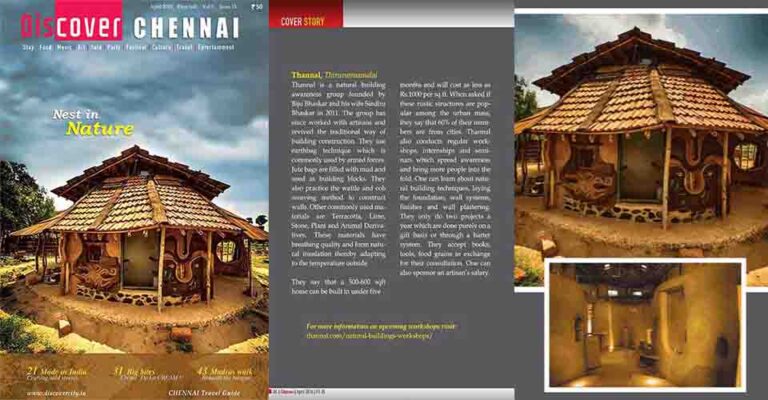
  • Discover Chennai travel guide's April 2019 'Nest in Nature' cover story on Thannal — a round mud house with a tiled conical roof.

    Discover Chennai · 2019

    Nest in Nature

    Cover story

    English
    These materials have breathing quality and form natural insulation thereby adapting to the temperature outside.

    A mud home on the cover of a city travel guide — for April 2019, Discover Chennai gave its "Nest in Nature" cover story to Thannal Natural Homes, turning readers who were hunting for a getaway toward natural building instead. The feature walks through the earthbag walls, wattle-and-cob and lime Thannal builds with, and how such materials breathe and keep a house cool. Founded by Ar. Biju Bhaskar and Sindhu Bhaskar, Thannal offers its earth homes as the change worth discovering.

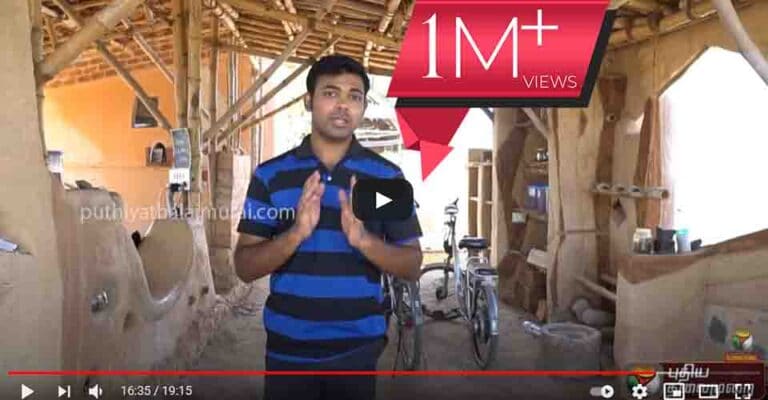
  • Puthiyathalaimurai TV's 'Veedu' report inside a Thannal Natural Homes mud home — the presenter amid earth-built furniture, with the '1M+ views' badge.Tamil

    Puthiyathalaimurai TV · 2019

    Inside a Thannal mud home

    Veedu

    TamilVideos

    Few natural homes have been seen by as many people as this one: Puthiyathalaimurai TV — one of Tamil Nadu's leading 24-hour news channels — took its 'Veedu' programme inside the home Ar. Biju Bhaskar and Sindhu Bhaskar of Thannal Natural Homes built for themselves in 2016, training local villagers to raise it alongside them. The report has since crossed a million views. Rather than rent a place elsewhere, they chose a small house on their own land — the surest way to understand the earth they build with, and to hand the craft to the people around them. The roughly ₹3-lakh home the 2019 broadcast walked through, room by room, is proof such a house is within a common person's reach.

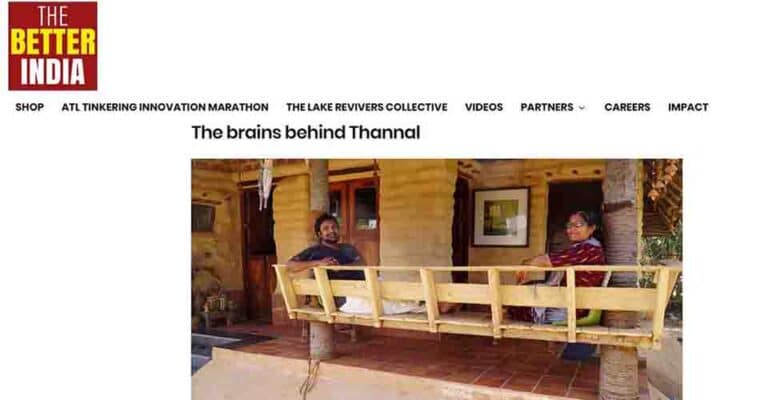
  • The Better India's 2019 feature 'Not Just a Humble Hut' on Thannal — Biju and Sindhu Bhaskar seated on their mud-house veranda.

    The Better India · 2019

    Not Just a Humble Hut: TN Org Shows How Mud Houses Can Be Viable in Cities Too!

    Tanvi Patel

    English
    Mud walls, being porous, can breathe, like our skin.— Ar. Biju Bhaskar

    Can a mud house really work in a city, not just a village? That is the question The Better India put to Thannal Natural Homes in this 2019 feature by Tanvi Patel. Sindhu Bhaskar's answer stays with you: at any city building site, tonnes of mud are dug out and buried under concrete — mud that is "like gold" for making homes. The piece lays the case out plainly: walls that breathe, materials that return to the earth, and houses raised by the very hands that will live in them. And the brains behind Thannal? Ar. Biju Bhaskar and Sindhu Bhaskar, who live in the mud house they teach others to build.

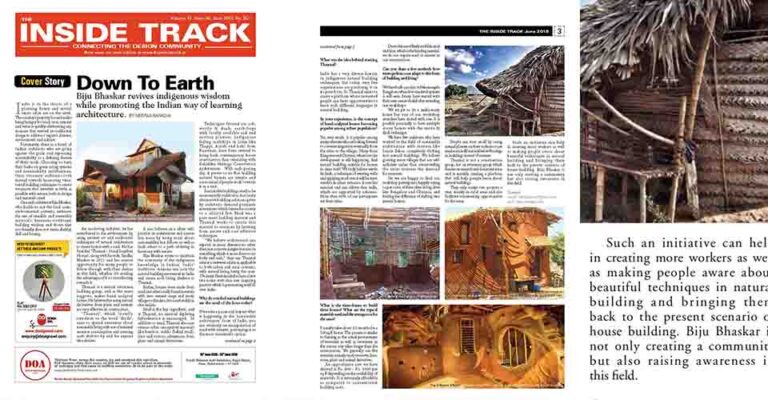
  • The Inside Track's June 2018 cover story 'Down To Earth' — the magazine spread on Biju Bhaskar and Thannal's natural mud buildings.

    The Inside Track · 2018

    Down To Earth

    Neerja Kapadia

    English
    We believe architecture can expand in more dimensions other than just concrete jungles but also in something which is more close to our body and soul.— Ar. Biju Bhaskar and Sindhu Bhaskar

    Turning his back on green-rating badges and certifications, Ar. Biju Bhaskar trusts time-tested craft instead — and in June 2018 the Mumbai design trade magazine The Inside Track made that the subject of its cover story and a long interview. The piece records how Thannal revived fading Rajasthani lime crafts by name — Thappi, Araish and Lohi — and how Biju sees mud, once dismissed as "a poor man's material," as something to return to everyone. Its real question was not how buildings are rated, but how they are taught.

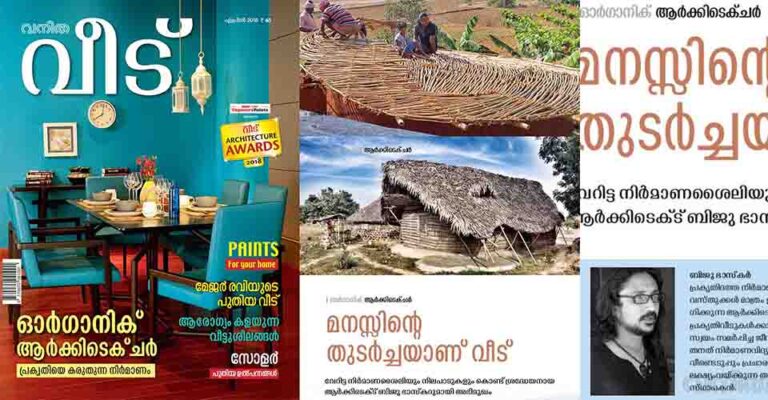
  • Vanitha Veedu April 2018 'Organic Architecture' feature — the cover, Ar. Biju Bhaskar's portrait and a long thatched mud home.Malayalam

    Vanitha Veedu · 2018

    മനസ്സിന്റെ തുടർച്ചയാണ് വീട്

    Print feature

    Malayalam
    പ്യുവർ വെജിറ്റേറിയൻ എന്നു പറയാറില്ലേ. അതുപോലെ 'പ്യുവർ ഓർഗാനിക്' ശൈലിയാണ് തണൽ പിന്തുടരുന്നത് — മണ്ണിൽ ഒട്ടും സിമൻ്റ് ചേർക്കാതെ. — ആർക്കിടെക്ട് ബിജു ഭാസ്കർPeople say 'pure vegetarian.' In the same way, Thannal is 'pure organic'—strictly zero cement in mud.— Ar. Biju Bhaskar

    For its April 2018 'Organic Architecture' issue, the Malayalam home magazine Vanitha Veedu visited Ar. Biju Bhaskar at Thannal's Pandithapettu campus — where not a grain of cement appears, not even in the water tank. Every material is mud, bamboo, lime or palm, and all of it returns to the soil. Thannal raises only three or four houses a year, and the family who will live there must help build it by hand — because, Biju tells the magazine, a house is a continuation of the mind.

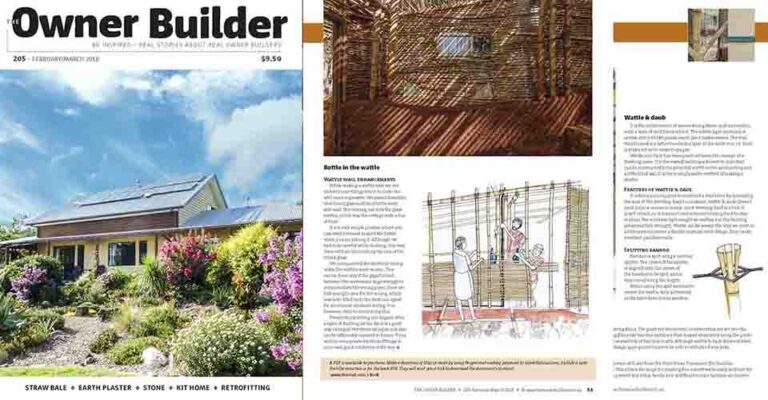
  • The Owner Builder, issue 205, 2018 — the cover and Thannal's Weaving Walls wattle-and-daub feature with step diagrams.

    The Owner Builder, Australia · 2018

    Weaving Walls — pages from Thannal's own book

    Book extract

    EnglishInternational
    Wattle and daub has been practiced since the concept of a dwelling arose.— Ar. Biju Bhaskar, Weaving Walls

    When the Australian magazine The Owner Builder — a voice for people building their own homes since 1981 — wanted to show its readers wattle and daub, its editor Lynda Brighton asked Thannal's permission and ran pages straight from Thannal's own book, Weaving Walls. Split bamboo is woven like basket-work, then daubed with earth; blue glass bottles are even set into the west wall so the evening sun washes the cottage in blue. At a time when few in India built this way, an Australian magazine carried the craft to owner-builders worldwide.

    REPUBLISHEDRead it ↗
  • A Thannal earth-building interior — bamboo-domed ceiling, round skylight and a wall of hanging plants — featured by Re-Thinking The Future.

    Re-thinking The Future · 2018

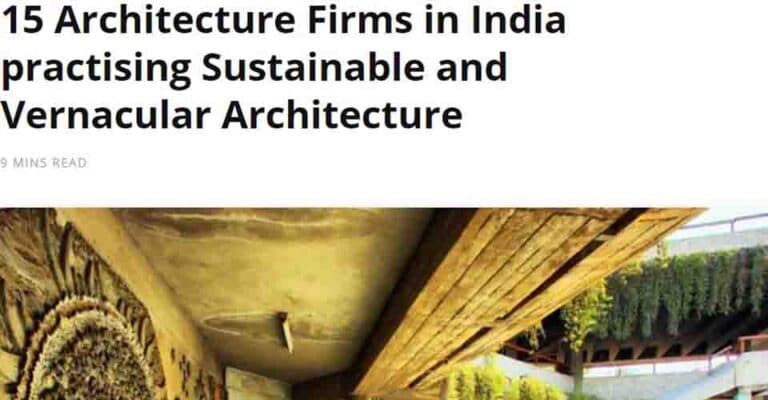
    15 Architecture Firms in India practising Sustainable and Vernacular Architecture

    Listicle

    English
    Indigenous knowledge in shelter making, which was practised in India from the Vedic ages is what we explore and examine.

    For its survey of India's sustainable, vernacular architecture, the global architecture platform Re-Thinking The Future placed Thannal Natural Homes among fifteen chosen practices. Its entry reaches back to first principles: the pozzolanic reactions of suda (lime) and surkhi (burnt mud) recorded in the Vishnudharmottara's Chitrasutra, and the plant and animal derivatives that once bound India's houses. It closes on a hard truth — that much of this written knowledge has been lost to invasion and time.

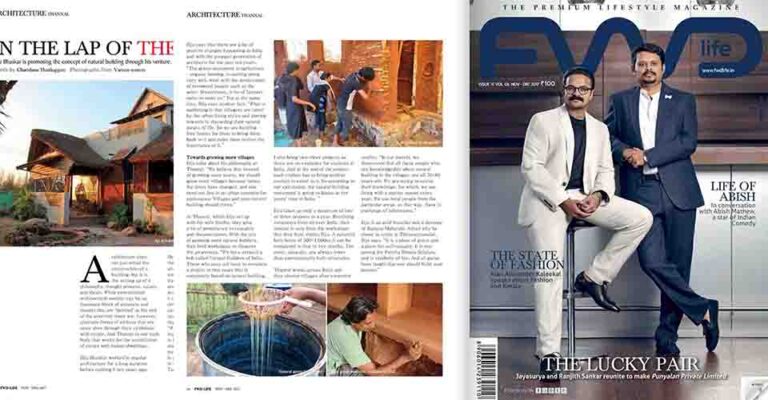
  • The 'In the Lap of the Earth' feature in FWD Life magazine (Nov–Dec 2017) — the cover beside photos of Thannal's mud buildings, hand-plastering and natural-gum plaster.

    FWD Life · 2017

    In the Lap of the Earth

    Charishma Thankappan

    English
    It is a place of gurus and a place for self-enquiry. Like the masters before us, we are taught the discipline of building mud houses.— Ar. Biju Bhaskar

    For its November–December 2017 issue, the Kochi glossy FWD Life — Kerala's premium English lifestyle magazine, read across the state's cafés, malls and clubs — turned from fashion and film to mud. Writer Charishma Thankappan carried Ar. Biju Bhaskar's uncomfortable question to its affluent readers: the mud architecture now fashionable in Kerala — is it truly natural, or quietly mixed with cement that weakens the earth? His answer looks past the city altogether: grow more villages, he argues, not more towns.

  • Eartha, July 2017: Not Just Another Brick In The Wall - 10 Indian architects building sustainable homes

    Eartha · 2017

    Not Just Another Brick In The Wall: 10 Indian Architects Who Are Building Sustainable Homes

    Round-up

    English

    A round-up of ten Indian architects working on sustainable homes. Thannal is one of them.

    In the Thannal archiveLISTED
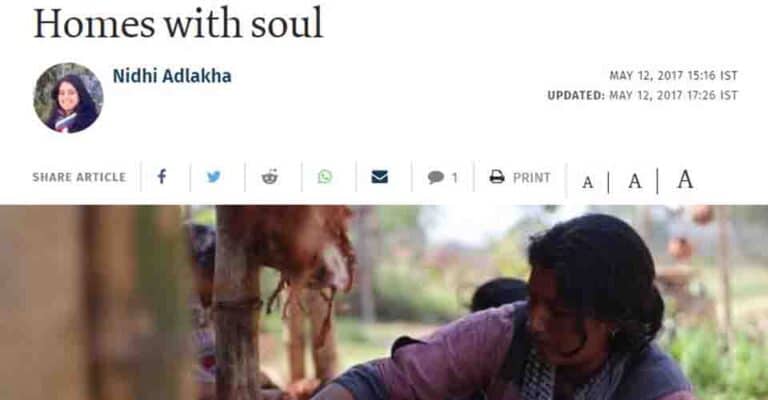
  • The Hindu's 2017 interview 'Homes with soul' by Nidhi Adlakha — the headline above a photo of hands-on natural building at Thannal.

    The Hindu · 2017

    Homes with soul

    Nidhi Adlakha

    English
    Stone, bamboo, lime, terracotta, and mud — a lot can be done with these five materials.— Ar. Biju Bhaskar

    A song about a mud brick — that was the hook when The Hindu, one of India's oldest national dailies, interviewed Ar. Biju Bhaskar in May 2017. 'Adobe Girl', his own concept for a natural-building song, renames sun-dried adobe the 'sunrise brick', his way of carrying natural building to the young. The talk roams from wood-sculpting learnt in Khajuraho to the Earthbag house he raised with his family, four farmers and two shepherds — bound with jute sacks, tamarind seeds and cactus juice — and Thannal Natural Homes' 'Ageless Villages' study of homes that still answer their climate.

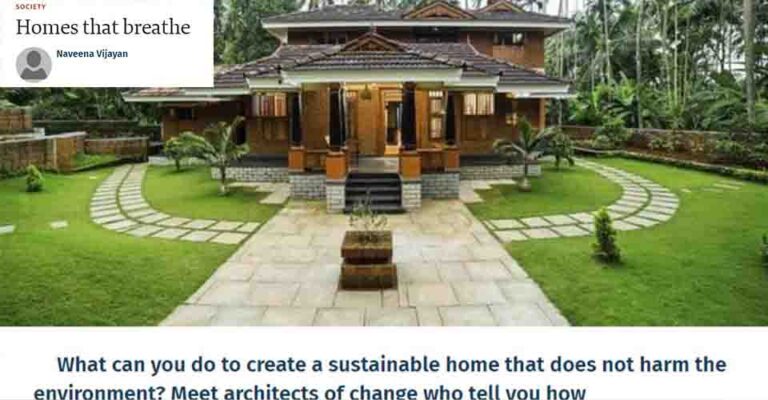
  • The Hindu's 2017 feature 'Homes that breathe' by Naveena Vijayan, on Thannal and India's natural earth homes.

    The Hindu · 2017

    Homes that breathe

    Naveena Vijayan

    English
    A 500-square-foot home can be built in two months, if you have some friends to help you.— Ar. Biju Bhaskar

    Surveying India's revival of earth homes — a movement it traces to the legendary Laurie Baker — The Hindu placed Thannal among the country's leading natural builders. What set the piece apart was its faith that ordinary people can build for themselves: among Thannal's volunteers, a 63-year-old teacher is now raising her own house in Kerala. Near Tiruvannamalai, the writer watched a 300 sq ft cob hut take shape — clay, sand and coconut coir mixed by farm animals into walls that need no cement.

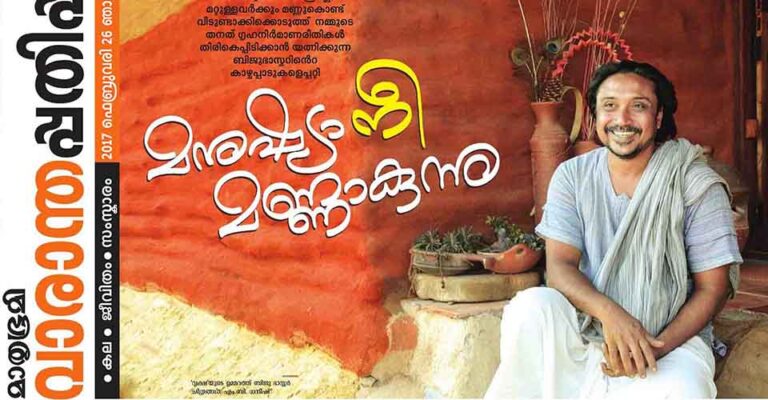
  • Mathrubhumi Sunday supplement, February 2017: Biju Bhaskar photographed at Thannal in TiruvannamalaiMalayalam

    Mathrubhumi · 2017

    മനുഷ്യാ, നീ മണ്ണാകുന്നു

    C. Sandeepani

    Malayalam
    മണ്ണിലേക്ക് മടങ്ങുക... പക്ഷേ, മൃതരായിട്ടല്ല, ജീവിച്ചിരിക്കുമ്പോൾ തന്നെReturn to the earth — but not as the dead. While still living.

    Mathrubhumi is one of Kerala's oldest newspapers, and it gave Thannal a full page in its Sunday supplement. The article tells how Biju left home at Guruvayur with a rolled-up grass mat and Sindhu beside him holding their baby; how they bought seventy cents of land six kilometres from the Ramanashram stop; and how they dug a pond first and built the house from the earth they took out. No cement, no concrete, no steel. The house is called Vriksha. When the building started, their elder son Adhya Vriksha told his teacher that his father was building a house and he wanted to help.

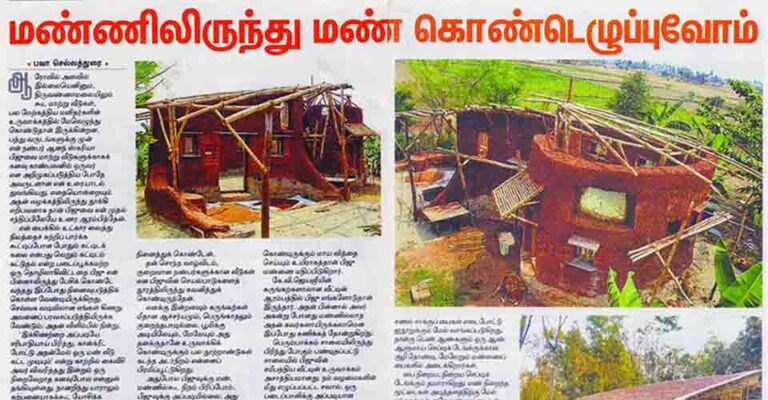
  • The Hindu Tamil clipping — Bava Chelladurai's feature with photos of Thannal Natural Homes' cob kitchen under its bamboo roof frame.Tamil

    The Hindu (Tamil) · 2017

    We Will Raise a Home from the Earth

    Bava Chelladurai

    Tamil
    one of the artists who make alternative homes— Bava Chelladurai

    For The Hindu's Tamil 'Sondha Veedu' pages, the storyteller and actor Bava Chelladurai — known in Tiruvannamalai for drawing crowds by reading books aloud in the open, sixty at first, later five hundred — wrote not a builder's report but an artist's tribute. He recalls being introduced to Ar. Biju Bhaskar a decade ago, and seeing at once a maker who throws off convention. In Thannal he finds the creativity that ordinary construction has forgotten — a home rising, quietly, straight from the earth.

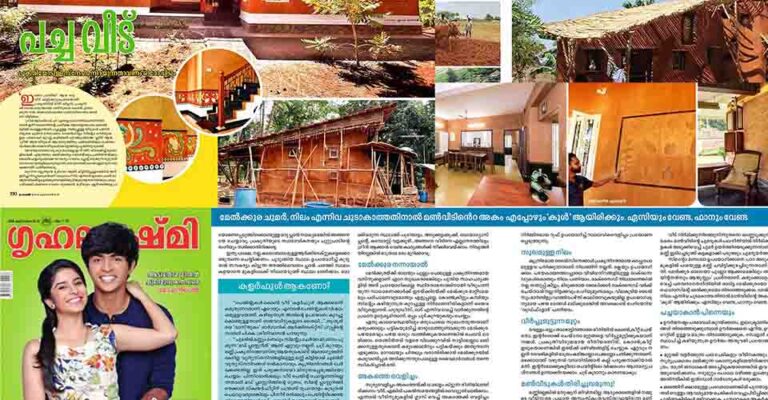
  • Grihalakshmi's 'Pachcha Veedu' (Green House) feature — the Malayalam magazine spread on natural mud homes, illustrated with Thannal's earth buildings and leaf-print plaster.Malayalam

    Grihalakshmi · 2016

    Back to Earth Homes

    C. Sandeepani

    Malayalam
    'ഇക്കോ ഫ്രണ്ട്‌ലി' ആയ ഒരു വീട് കിളിക്കൂടുപോലെയാണ്.An 'eco-friendly' home is like a bird's nest.

    Mud houses are coming back — that is the message of 'Pachcha Veedu' (Green House), a feature in Grihalakshmi, one of Kerala's popular Malayalam women's magazines. It places Ar. Biju Bhaskar, the Malayali who settled at Arunachala in Tamil Nadu to build homes from only natural materials, among the architects leading the revival, beside Eugene Pandala and others. Thannal's own buildings fill the pages — red earth walls, leaf-print plaster and bamboo-and-mud rooms that, it says, stay cool with no fan and no AC.

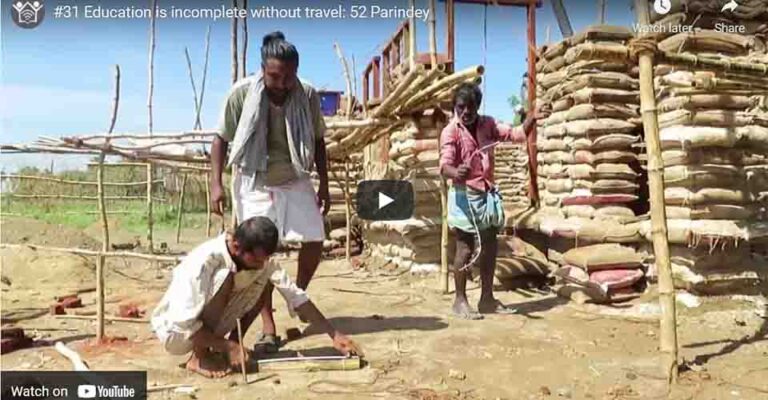
  • 52 Parindey (DEF) episode 31 'Education is incomplete without travel' — villagers raising an earthbag-and-bamboo wall at Thannal Natural Homes.

    52 Parindey · 2016

    Education is incomplete without travel

    Rahul Karanpuriya

    EnglishHindiVideos
    Travel is our best teacher.— Ar. Biju Bhaskar

    On a year-long ride of 25,280 kilometres, the traveller Rahul Karanpuriya — an MBA dropout — crossed sixteen states for 52 Parindey, the Digital Empowerment Foundation's search for fifty-two people making a living from unusual or dying vocations. Ar. Biju Bhaskar was one of them. His chapter turns on a single belief: that travel, not the classroom, is the real teacher. Stepping away from architecture school to travel, he learned sculpture and the five elements — earth, water, fire, wind and ether — from a guru, then completed his degree and came home to build houses as an art, not just a structure. Thannal Natural Homes grew from that road.

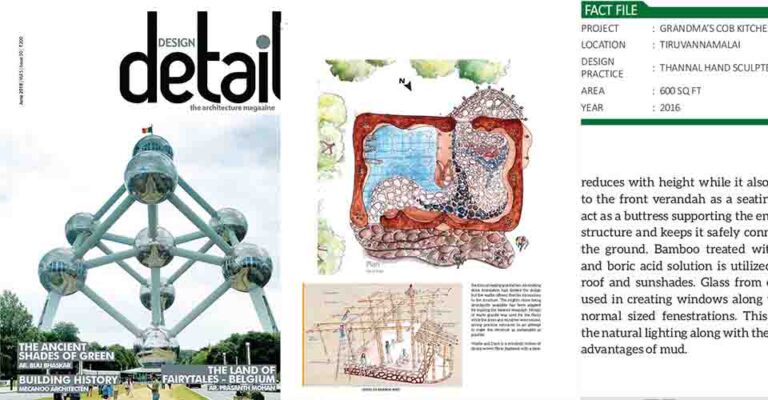
  • Design Detail magazine: hand-drawn plan and section of Grandma's Cob Kitchen, 600 sq ft, Tiruvannamalai

    Design Detail · 2016

    Grandma's Cob Kitchen

    Project feature

    English

    Design Detail is an architecture magazine. It published the drawings — plan and section — with a fact panel naming the project, the practice, the area and the year. The article describes bamboo treated with boric acid, and glass set into mud walls.

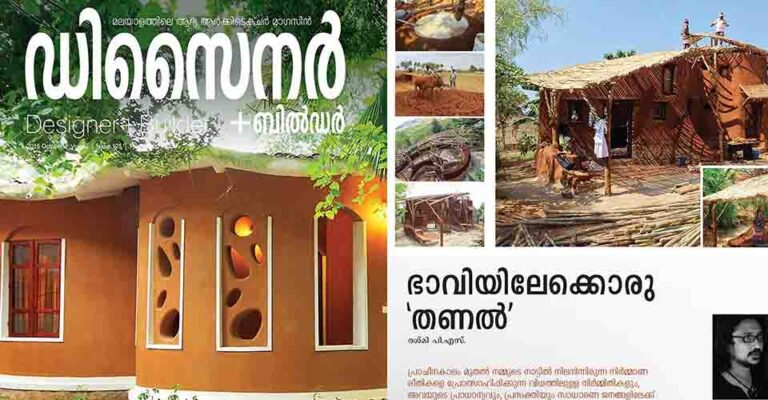
  • Designer + Builder magazine (Malayalam, 2015) — its cover and the 'Buildings with a soul' feature spread on Thannal's earth homes.Malayalam

    Designer + Builder · 2015

    A Shade for the Future

    Rashmi P.S.

    Malayalam
    ഭൂമിയെ മറന്ന്, എല്ലാം മണ്ണിലേക്കു മടങ്ങാനുള്ളതാണെന്ന കാര്യം മറന്ന്…We forget the earth — and forget that everything must one day return to the soil.— Ar. Biju Bhaskar

    One of Malayalam's first architecture magazines, Designer + Builder gave its October 2015 'Alternatives' pages to Thannal — a method-by-method look at how earth becomes a home. Writer Rashmi P.S. walks through cob, adobe, wattle-and-daub and rammed earth, bamboo cured for two weeks in borax before it is raised, and grass roofs of lemongrass and vetiver that need no touch-up for twelve years. The walls, it explains, are woven like basketwork and finished by hand, and Thannal trains local villagers to carry the craft on. Ar. Biju Bhaskar's point runs underneath: mud can be reused; cement cannot. It closes on the poet O.N.V.'s line — plant a sapling and you plant a shade — the very word that named Thannal.

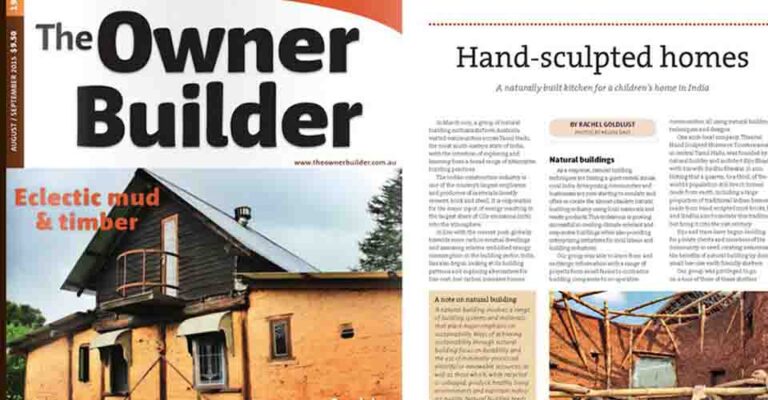
  • The Owner Builder issue 190, 2015 — the mud-and-timber cover and Rachel Goldlust's 'Hand-sculpted homes' feature on Thannal.

    The Owner Builder, Australia · 2015

    Hand-Sculpted Homes: A Naturally Built Kitchen For A Children's Home in India

    Rachel Goldlust

    EnglishInternational
    Our group was privileged to go on a tour of three of these shelters.— Dr Rachel Goldlust — long-term natural builder and Australian environmental historian

    In March 2015 a group of Australian natural-building enthusiasts toured Tamil Nadu to learn from India's alternative ways of building — and found natural building quietly reviving across the countryside. One of the places they visited was Thannal, near Tiruvannamalai, founded by Ar. Biju Bhaskar and Sindhu Bhaskar. Rachel Goldlust's report for The Owner Builder magazine, Australia, centres on the warmest of their projects: a hand-built earthen kitchen for a children's home — old mud-building wisdom carried into the 21st century.

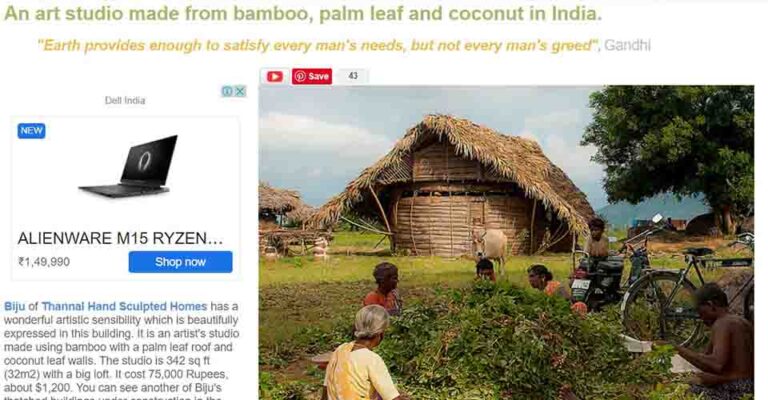
  • An art studio at Thannal built from bamboo, palm leaf and coconut, with a thatched roof

    Natural Homes

    An art studio made from bamboo, palm leaf and coconut in India

    EnglishInternational
    Biju of Thannal Hand Sculpted Homes has a wonderful artistic sensibility.

    With a Gandhi line at its head — "Earth provides enough to satisfy every man's needs, but not every man's greed" — the international natural-building community Natural Homes singled out one of Ar. Biju Bhaskar's buildings for its sheer artistry. It is an art studio: a bamboo frame, coconut-leaf walls and a palm-leaf roof, 342 sq ft with a big loft. Where most coverage weighs cost or strength, Natural Homes saw beauty — a working studio that is itself a piece of craft.

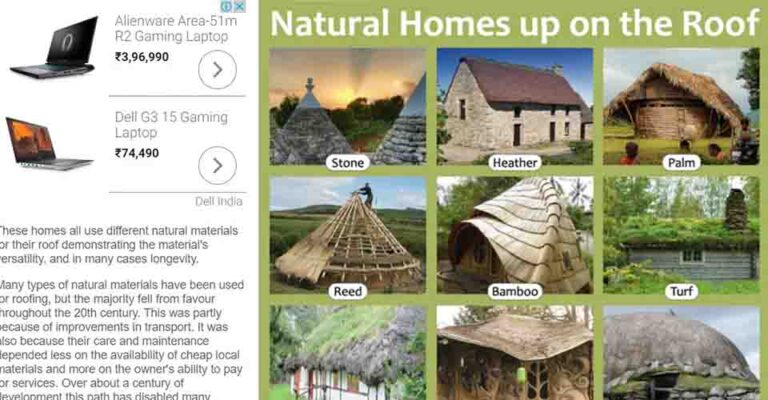
  • Natural roofs compared - stone, heather, palm, reed, bamboo and turf

    Natural Homes

    Natural homes up on the Roof — 9 homes around the world

    EnglishInternational
    Biju is using palm leaf for thatching to show locals its value as a sustainable crop.

    For a feature on the world's natural roofs, Natural Homes set Thannal's palm-leaf thatch among nine from across the globe — Italian limestone trulli, English heather, Welsh reed, Danish seaweed said to last four hundred years, a Swedish birch-and-turf cabin, a Scottish blackhouse. Thannal is the Indian entry: a palm-leaf roof chosen not only to keep a house cool, but to give villagers a reason to plant palm again and bring the trees back to a healthy number.

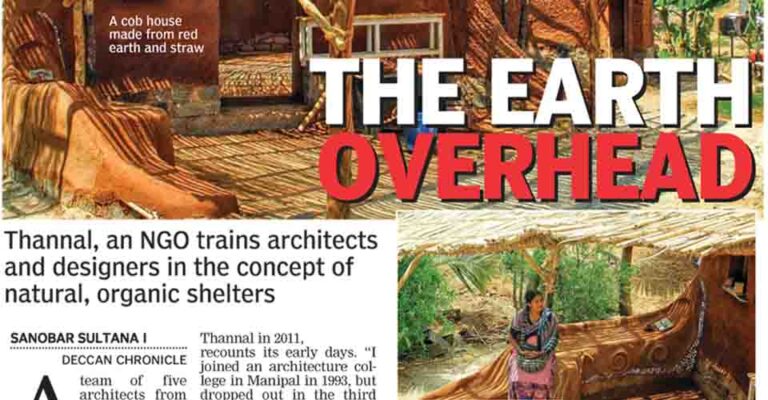
  • Deccan Chronicle 'The Earth Overhead' feature on Thannal Natural Homes — a cob house with a bamboo roof frame and Sindhu Bhaskar seated on a curved cob bench.

    Deccan Chronicle

    The Earth Overhead

    English
    The most important lesson I received from the tribes is that one can build homes with their own hands.— Ar. Biju Bhaskar

    Under its 'Spot Light' banner — reserved for people making a difference — Deccan Chronicle, South India's leading English daily since 1938, sent Sanobar Sultana to Thannal Natural Homes. Her report looks past the romance of mud to its engineering: limestone in place of cement, bamboo doing the work of iron beams, and lime that cools a house enough to save 30–40% on energy. A volunteer architect even argues earthen homes can ride out earthquakes — and the paint here is turmeric and beetroot, not emulsion. As Sindhu Bhaskar puts it, 'Our aim is to reach out to students, architects, and villagers and turn them into natural builders who utilise minimum space and use only natural materials.'

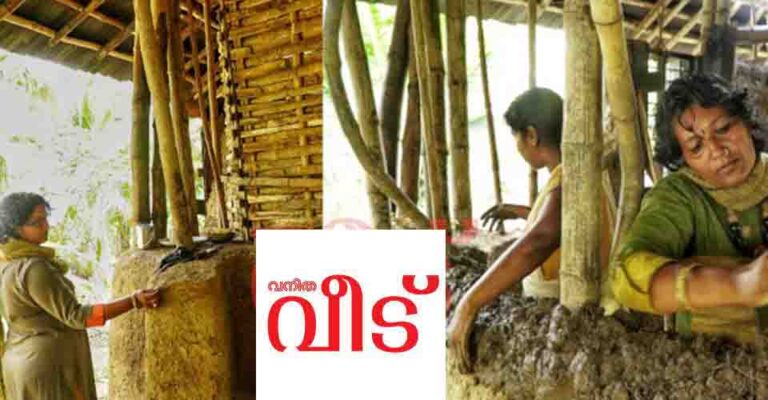
  • Vanitha Veedu magazine: women hand-plastering a mud wall inside a bamboo-framed house at ThannalMalayalam

    Vanitha Veedu

    Building a mud home by hand

    Malayalam

    Vanitha Veedu is a Malayalam home and design magazine. The feature shows women plastering a mud wall by hand inside a bamboo-framed house.

    In the Thannal archive
Scroll to Top